
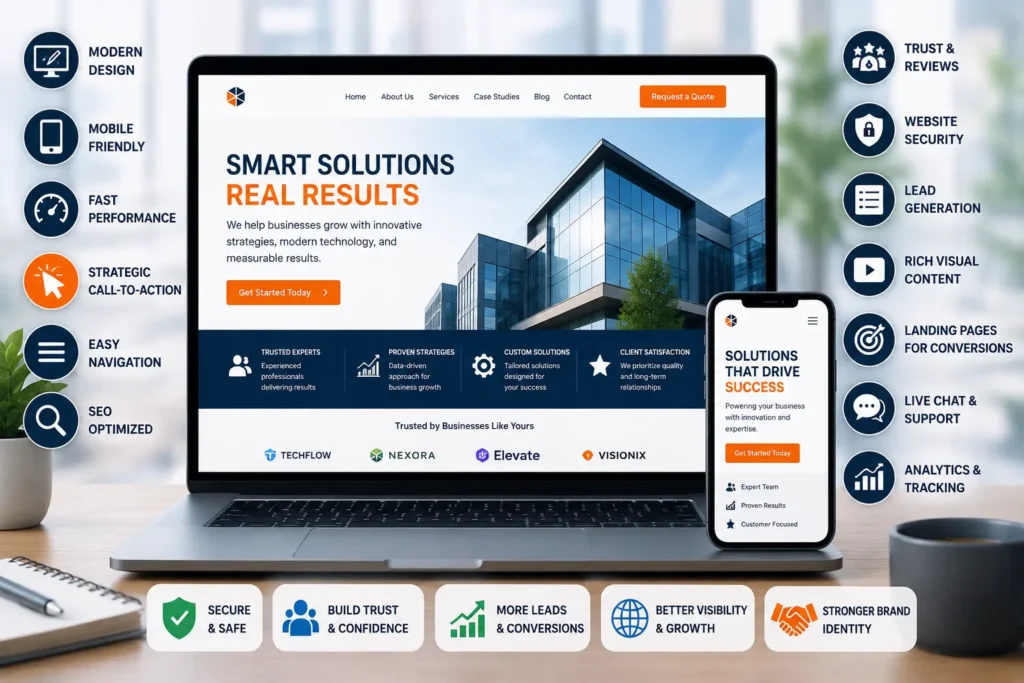
In the modern digital landscape, a company’s website is often the first place potential customers interact with a brand. Whether someone is searching for products, comparing services, or learning more about a business, your website plays a major role in shaping their decision-making process.
A business website should do more than simply exist online. It should attract visitors, keep them engaged, and encourage them to take action. This could mean filling out a contact form, making a purchase, booking a consultation, or requesting more information.
Websites that consistently turn visitors into customers are known as high-converting websites. These platforms are strategically designed to improve user experience, build trust, and support business goals.
In this article, we’ll explore the most important features that contribute to a successful, conversion-focused business website and why they matter for long-term growth.
Modern and Visually Appealing Design
The overall appearance of your website has a direct impact on how users perceive your business. Visitors quickly form opinions based on visual presentation, layout, and ease of use. A well-defined website design planning process helps businesses establish the right structure, user journey, content hierarchy, and visual direction before development begins, ensuring the final website is both visually appealing and aligned with business objectives.
An effective business website should feature:
- A clean and organized layout
- Consistent branding elements
- Professional typography
- Visually balanced color combinations
- High-resolution images
- Clear formatting
An outdated or cluttered website can make a company appear unprofessional. In contrast, a polished and modern design creates credibility and encourages users to stay longer on the site.
Strong visual presentation also helps businesses stand out in competitive industries.
Mobile-Friendly Website Experience
Today, a large portion of internet users browse websites using smartphones and tablets. If a website doesn’t function properly on smaller screens, businesses risk losing valuable traffic and potential leads.
A responsive website automatically adjusts to different devices and screen sizes, ensuring users have a smooth experience regardless of how they access the site.
Mobile-friendly websites offer several advantages, including:
- Better user engagement
- Improved accessibility
- Lower bounce rates
- Higher search engine rankings
- Increased conversion opportunities
Search engines also prioritize responsive websites, making mobile optimization an important part of digital success.
Fast Website Performance
Loading speed is one of the most important factors influencing user satisfaction. Visitors expect websites to load quickly, and even small delays can lead to higher abandonment rates.
A fast-performing website helps businesses:
- Retain visitors longer
- Improve user experience
- Increase page interactions
- Boost conversion rates
Several factors contribute to website speed, such as optimized images, lightweight coding, quality hosting, and efficient caching systems. Businesses using content management systems should also focus on overcoming common CMS platform challenges, as issues like inefficient plugins, outdated themes, and poor configuration can negatively impact website performance. Understanding why website performance optimization is crucial can help businesses prioritize these improvements, as faster websites not only enhance user satisfaction but also contribute to better search engine rankings and higher conversion rates.
Websites that perform smoothly create a more positive browsing experience and encourage users to explore additional pages.
Strategic Call-to-Action Buttons
A website should clearly direct users toward meaningful actions. Without proper guidance, visitors may leave without engaging with your business.
Call-to-action buttons help users understand what step to take next. Examples include:
- “Request a Quote”
- “Book a Free Consultation”
- “Contact Our Team”
- “Get Started Today”
Effective CTAs are:
- Easy to notice
- Action-driven
- Persuasive
- Positioned strategically across the website
Strong calls to action improve lead generation and encourage users to move through the customer journey more efficiently.
Easy and Intuitive Navigation
Visitors should never struggle to locate important information on your website. Clear navigation improves usability and keeps users engaged, while understanding the impact of poor website navigation can help businesses recognize how confusing menus, broken page structures, and difficult user journeys often lead to higher bounce rates and lost conversion opportunities.
A well-structured navigation system typically includes:
- Simple menus
- Clearly labeled pages
- Organized categories
- Internal links
- Search functionality
When users can easily find what they need, they are more likely to stay on the website and take action.
Simple navigation also creates a more professional and trustworthy impression.
Search Engine Optimization (SEO)
Having a visually impressive website means little if people cannot find it online. Search engine optimization helps improve visibility in search results and attracts relevant traffic.
An SEO-friendly website typically includes:
- Optimized page titles
- Proper heading structures
- Keyword-focused content
- Fast loading speeds
- Mobile responsiveness
- Internal linking
- Optimized URLs
Good SEO practices help businesses rank higher in search engines and generate more organic traffic over time.
Websites designed with SEO in mind often experience stronger long-term marketing performance.
Valuable and Informative Content
Content is one of the key drivers of website engagement and conversions. Users visit websites looking for useful information, answers, and solutions.
A high-quality business website should include:
- Detailed service descriptions
- Educational blog posts
- Frequently asked questions
- Customer success stories
- Industry insights
- Informative homepage messaging
Content should clearly explain how your products or services solve customer problems.
Helpful and engaging content also strengthens brand authority and supports SEO strategies.
Customer Reviews and Trust Indicators
Trust is essential when encouraging visitors to become customers. Businesses that display proof of reliability are more likely to earn customer confidence.
Important trust-building elements include:
- Client testimonials
- Online reviews
- Certifications
- Awards
- Security badges
- Portfolio examples
- Case studies
Positive feedback from real customers helps reassure visitors that your business delivers quality results.
Social proof can significantly influence purchasing decisions and increase conversion rates.
Website Security Features
Online security has become increasingly important for businesses and customers alike. Visitors expect websites to protect their data and browsing activity.
Secure websites typically use HTTPS encryption to ensure safe communication between users and the website.
Benefits of website security include:
- Increased customer trust
- Better protection against cyber threats
- Safer online transactions
- Improved search engine credibility
Security features are especially critical for websites handling customer inquiries, payment information, or sensitive data.
Optimized Lead Generation Forms
Forms are a crucial part of generating inquiries and capturing potential leads. However, complicated forms can discourage users from completing them.
Effective contact forms should be:
- Short and easy to fill out
- Clearly visible
- Mobile-friendly
- Simple to understand
Businesses should only request essential information to improve completion rates.
Adding additional communication options like phone numbers, emails, or live chat can also improve user convenience.
Strong Visual and Multimedia Content
Visual elements help make websites more engaging and easier to understand.
Useful multimedia features may include:
- Professional photography
- Explainer videos
- Interactive graphics
- Product showcases
- Animations
Visual content can improve storytelling and strengthen brand communication.
However, multimedia should be optimized properly to avoid slowing down the website.
Dedicated Landing Pages for Conversions
Landing pages are designed with a specific marketing goal in mind, such as lead generation or product promotion.
An effective landing page usually contains:
- A compelling headline
- Focused messaging
- Clear benefits
- Persuasive content
- Strong CTAs
- Minimal distractions
Businesses often use landing pages for advertising campaigns, service promotions, and targeted marketing efforts.
Well-designed landing pages can greatly improve conversion performance.
Live Chat and Instant Communication Options
Many users prefer immediate responses when browsing a business website. Live chat tools provide quick support and improve customer interaction.
Benefits of live chat features include:
- Faster communication
- Better customer support
- Higher engagement levels
- Increased conversion opportunities
Businesses can also use AI-powered chat systems to assist visitors outside regular working hours.
Quick support options create a smoother user experience and build trust.
Website Analytics and Data Tracking
Successful websites continuously evolve based on performance insights. Analytics tools help businesses understand how users interact with their websites.
Important metrics include:
- Visitor behavior
- Conversion rates
- Traffic sources
- Bounce rates
- Popular pages
Tracking data allows businesses to identify areas for improvement and optimize their website over time.
Data-driven improvements often lead to stronger marketing outcomes and better user experiences.
Consistent Brand Identity
A strong and recognizable brand identity helps businesses build trust and improve customer recall.
Consistency should be maintained across:
- Logos
- Colors
- Fonts
- Messaging
- Visual design
When branding remains uniform throughout the website, users are more likely to view the business as reliable and professional.
Brand consistency also strengthens marketing effectiveness across multiple platforms.
Accessibility and Inclusive User Experience
Web accessibility ensures all users can comfortably navigate and interact with your website, including individuals with disabilities. Following established website accessibility standards and best practices can help businesses create a more inclusive and user-friendly digital experience while reducing potential usability barriers.
Accessibility improvements may include:
- Image alt text
- Keyboard-friendly navigation
- Readable font sizes
- Proper color contrast
- Screen-reader compatibility
Accessible websites create a better experience for all users while demonstrating inclusivity and professionalism.
The Importance of a Conversion-Focused Website
A business website should actively contribute to growth and customer acquisition. High-performing websites help companies:
- Attract qualified traffic
- Build stronger credibility
- Increase customer engagement
- Generate more leads
- Improve sales opportunities
- Enhance online visibility
Businesses that invest in professional website development are better positioned to compete in today’s digital environment.
Conclusion
Creating a successful business website requires more than attractive visuals alone. A high-converting website combines responsive design, speed, SEO, user-friendly navigation, trust-building features, and compelling calls to action to deliver meaningful business results.
Every feature should work together to provide visitors with a seamless and engaging experience that encourages them to take action. As online competition continues to grow, businesses must prioritize websites that are optimized for both users and search engines. Before launching a new website, it’s also beneficial to follow a comprehensive website design checklist before publishing to ensure every essential element—from performance and responsiveness to SEO and usability—has been thoroughly reviewed. Businesses that are choosing between CMS and custom website development should carefully evaluate their long-term goals, scalability requirements, and budget before selecting the approach that best supports their growth strategy.
As online competition continues to grow, businesses must prioritize websites that are optimized for both users and search engines.If you want to build a professional website that enhances customer engagement and drives business growth, partnering with an experienced website design and development company in Watford, such as Horizon Services, can help you create a modern digital presence tailored to your business goals.


