
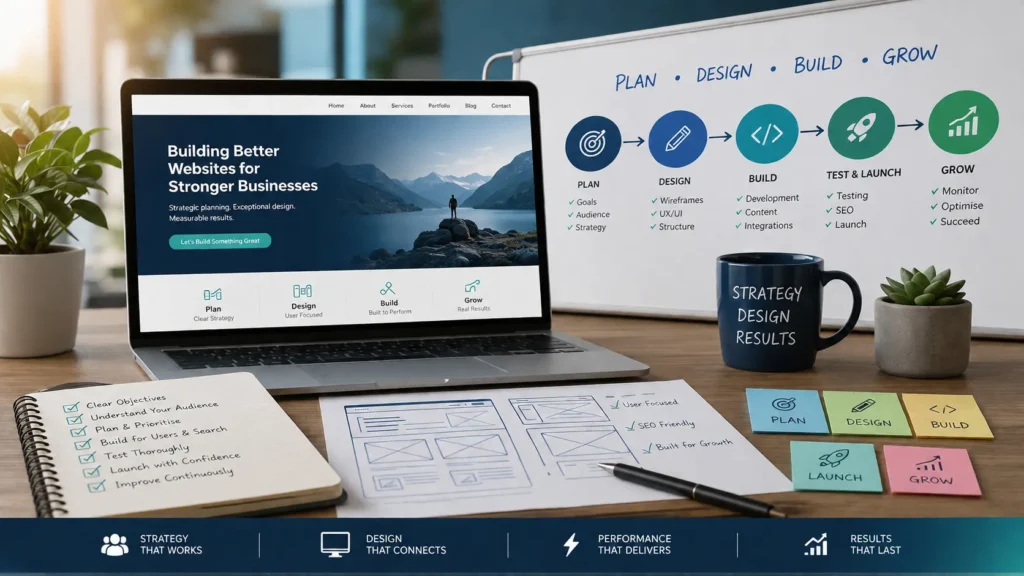
Creating a website is one of the most important investments a business can make. Your website is often the first place potential customers interact with your brand, making it a powerful tool for building credibility, attracting new leads, and driving sales. However, a successful website isn’t created by chance—it requires careful planning, clear objectives, and a structured development process.
Many website projects encounter delays, budget overruns, or disappointing results because essential planning steps are overlooked. By taking the time to define your goals, understand your audience, and establish a clear project roadmap, you can ensure your website delivers real business value from day one.
This guide explores each stage of a successful website design project, helping you move from the initial concept to a fully launched website that supports your long-term business objectives.
Start with Clearly Defined Business Objectives
Every successful website project begins with understanding exactly what you want to achieve. Before discussing layouts, colours, or functionality, identify the purpose of your website.
Ask yourself questions such as:
- Do you want to increase enquiries?
- Are you planning to sell products online?
- Is your priority to improve brand awareness?
- Do you need customers to schedule appointments?
- Will your website primarily provide information or resources?
Having measurable goals allows every decision—from design to content—to align with your overall business strategy.
For example, an online retailer requires features like secure payment processing and product filtering, while a local service provider may focus on enquiry forms, testimonials, and strong calls to action.
Documenting these objectives early keeps the project focused and prevents unnecessary changes later.
Understand Who Your Website Is For
An effective website is designed around its users rather than personal preferences.
Spend time researching your ideal audience by considering factors such as:
- Age groups
- Industry or profession
- Location
- Online behaviour
- Preferred devices
- Common challenges and needs
Knowing who will visit your website helps determine everything from navigation and page layouts to messaging and visual style.
Creating customer personas can be particularly useful, as they provide a clearer picture of the people your website is intended to serve.
Define the Project Requirements
One of the most common reasons website projects lose momentum is poor planning around features and functionality.
Before design work begins, create a comprehensive list of everything your website should include.
Examples include:
- Homepage
- Company information
- Service or product pages
- Contact page
- Blog
- Portfolio
- Customer testimonials
- Frequently Asked Questions
- Online booking
- Ecommerce functionality
- Live chat
- Newsletter signup
- CRM integration
- Social media links
Separate features into essential requirements and future enhancements. This approach helps maintain focus while allowing room for future growth.
Establish a Realistic Budget
Website costs vary depending on the project’s complexity, customisation, and ongoing requirements.
Rather than focusing solely on development costs, consider your entire digital investment, including:
- Website strategy
- User experience design
- Visual design
- Development
- Copywriting
- Photography or graphics
- Search engine optimisation
- Domain registration
- Web hosting
- Maintenance and updates
A professionally designed website should be viewed as a long-term business asset rather than a short-term expense.
Create a Practical Project Timeline
Breaking the project into manageable phases helps ensure progress stays on schedule.
A typical website design timeline may include:
- Discovery and consultation
- Research and planning
- Sitemap creation
- Wireframe development
- Visual design
- Website development
- Content integration
- SEO implementation
- Testing and quality assurance
- Website launch
- Ongoing optimisation
Allow sufficient time for approvals, revisions, and testing to avoid unnecessary delays.
Plan a Clear Website Structure
A well-organised website makes it easier for visitors to find the information they need.
Begin by creating a sitemap that outlines your website’s structure.
For example:
- Home
- About Us
- Services
- Individual Service Pages
- Portfolio
- Blog
- Contact
Keeping navigation simple improves user experience while helping search engines understand your website more effectively.
Avoid overcrowding menus with unnecessary pages or complicated navigation paths.
Prioritise User Experience
An attractive design alone will not guarantee success.
Visitors expect websites that are easy to navigate, quick to load, and simple to use.
Good user experience includes:
- Clear navigation menus
- Consistent page layouts
- Fast loading times
- Mobile-friendly design
- Easy-to-read typography
- Logical page hierarchy
- Accessible content
Following recognised website accessibility guidelines during the design and development process can also help ensure that content, navigation, forms, and other interactive elements are usable by people with different abilities.
The simpler it is for users to achieve their goals, the more likely they are to become customers.
Develop High-Quality Website Content
Content is just as important as design.
Every page should provide useful, relevant information that helps visitors make informed decisions.
Typical website content includes:
- Homepage introduction
- About the business
- Service descriptions
- Team profiles
- Customer testimonials
- Frequently Asked Questions
- Blog articles
- Calls to action
- Case studies
Writing clear, engaging content not only builds trust but also improves your website’s visibility in search engines.
Include SEO from the Beginning
Search engine optimisation should never be treated as an afterthought.
Planning SEO during the website design process ensures your site is built with search visibility in mind.
Important SEO considerations include:
- Keyword research
- Optimised page titles
- Meta descriptions
- Clean URL structures
- Internal linking
- Heading hierarchy
- Image optimisation
- Technical SEO
- XML sitemaps
- Structured data
Integrating SEO from the start creates a stronger foundation for future organic growth.
Design for Every Device
Today’s users browse websites on a wide range of devices.
Whether someone visits from a smartphone, tablet, laptop, or desktop computer, your website should provide a consistent experience.
Responsive design ensures:
- Text remains readable
- Images scale correctly
- Navigation works smoothly
- Buttons are easy to tap
- Forms are simple to complete
Mobile responsiveness is now an essential requirement rather than an optional feature.
Select the Right Technology
Choosing the appropriate platform is a critical decision that affects your website’s future flexibility.
Consider factors such as:
- Ease of content management
- Scalability
- Security
- Third-party integrations
- Performance
- Ongoing maintenance
The right technology should support both your current needs and future business growth.
Optimise Website Performance
Website speed significantly influences user satisfaction and conversion rates.
Improve performance by:
- Compressing large images
- Minimising unnecessary scripts
- Using reliable hosting
- Enabling browser caching
- Optimising code
- Reducing plugin usage
Fast websites provide better user experiences while contributing to stronger search engine rankings.
Test Everything Before Launch
Launching without thorough testing can result in avoidable problems.
Before going live, review:
- Internal links
- Contact forms
- Mobile compatibility
- Browser compatibility
- Website speed
- Navigation
- Analytics setup
- Security features
- SEO settings
Comprehensive testing ensures visitors enjoy a seamless experience from the first day.
Prepare for Launch
A successful launch involves more than simply publishing the website. Using a structured website pre-launch checklist can help ensure that important technical, content, SEO, and usability elements have been reviewed before the site goes live.
Create a checklist that includes:
- Connecting the domain
- Installing an SSL certificate
- Setting up Google Analytics
- Configuring Search Console
- Creating backups
- Testing forms
- Reviewing redirects
- Submitting the XML sitemap
- Checking robots.txt
A structured launch process reduces the risk of technical issues.
Continue Improving After Launch
Launching your website marks the beginning of its journey rather than the end.
Monitor important performance indicators such as:
- Website traffic
- User engagement
- Conversion rates
- Search rankings
- Popular content
- Bounce rate
Regular updates, fresh content, and technical maintenance help keep your website secure, relevant, and competitive. Following a practical website maintenance guide can also help you stay on top of essential tasks such as software updates, security checks, backups, performance monitoring, and content reviews.
Treating maintenance as an ongoing process allows you to identify issues early, improve the user experience, and ensure your website continues to support your business objectives over time.
Common Website Planning Mistakes
Avoid these frequent mistakes that can negatively impact your project’s success:
- Beginning without defined business goals.
- Ignoring the needs of your target audience.
- Adding unnecessary functionality.
- Delaying SEO implementation.
- Publishing low-quality content.
- Forgetting mobile optimisation.
- Using inconsistent branding.
- Skipping testing before launch.
- Prioritising appearance over usability.
- Neglecting ongoing website maintenance.
It is also important to consider how design and usability decisions can affect your website’s ability to turn visitors into customers. Understanding the website mistakes that reduce conversions can help you identify potential issues early and ensure your site is designed not only to look professional but also to encourage meaningful user actions.
Recognising these challenges early can save considerable time and resources.
The Value of Professional Website Design
Building a successful website involves much more than visual design. Strategy, user experience, development, content creation, technical optimisation, and digital marketing all contribute to a website’s overall effectiveness.
Partnering with an experienced digital agency provides access to specialists who understand how to create websites that not only look professional but also support measurable business growth. From planning through to launch and ongoing support, expert guidance helps ensure every stage of the project is completed efficiently and to a high standard.
Final Thoughts
A successful website design project starts with careful planning and continues through every stage of development, testing, and optimisation. Defining clear objectives, understanding your audience, creating valuable content, prioritising user experience, and implementing SEO from the outset all contribute to a website that performs effectively.
Rather than treating your website as a one-off project, view it as a continually evolving business asset. Regular improvements and strategic updates will help your website remain competitive, attract new customers, and support your business for years to come.
Ready to Build a Website That Supports Your Business Growth?
If you’re looking for a trusted digital partner to help plan, design, develop, and maintain a high-performing website, Horizon Services offers tailored web solutions for businesses across a wide range of industries. Our experienced team combines creative design with technical expertise to deliver websites that are visually engaging, easy to use, and built to achieve measurable results.
Discover how our website design company in Watford can help transform your online presence with a website designed to grow alongside your business.


