
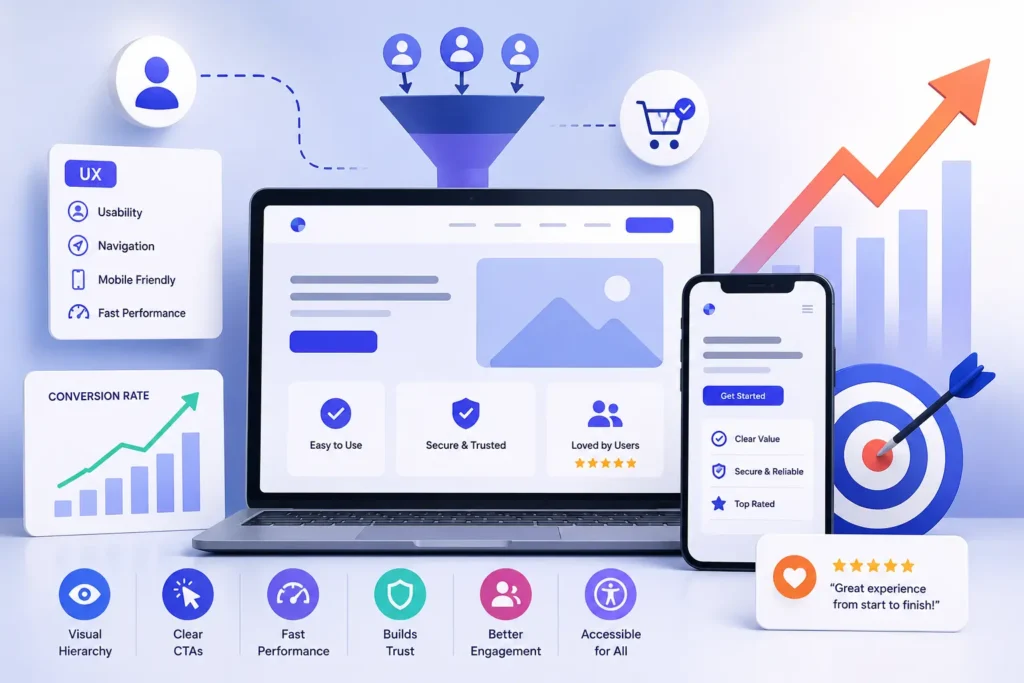
In the modern digital ecosystem, bringing users to your website or application is just the beginning. The real success lies in turning those visitors into paying customers, subscribers, or active users. This is where UI/UX design becomes a powerful driver of results. A well-crafted user interface (UI) combined with a smooth and intuitive user experience (UX) can significantly shape user behavior—and ultimately determine whether they convert. Understanding the benefits of Investing in UI/UX design for better ROI can help businesses make smarter decisions that directly impact their bottom line. Businesses that also stay updated with UI/UX design trends that boost user engagement are better positioned to create digital experiences that keep users engaged, reduce friction, and increase conversion rates.
In this blog, we’ll explore how UI/UX design directly affects conversion rates in digital products and why a user-first design approach is crucial for sustainable growth.
Breaking Down UI and UX Design
To understand their impact, it’s essential to differentiate between UI and UX:
- User Interface (UI) focuses on the visual aspects of a product, such as layout, typography, color schemes, and interactive elements.
- User Experience (UX) encompasses the overall interaction a user has with a product, including usability, accessibility, and ease of navigation.
While UI captures attention, UX ensures users stay engaged and complete desired actions.
What Do Conversion Rates Mean?
Conversion rate refers to the percentage of users who perform a specific action on your platform. These actions can include:
- Completing a purchase
- Subscribing to a service or newsletter
- Filling out a contact or inquiry form
- Downloading an application or digital asset
Even minor improvements in UI/UX design can lead to noticeable increases in conversion rates, making it a highly effective optimization strategy.
The Importance of First Impressions
Users typically form opinions about your digital product within seconds. A cluttered interface, confusing structure, or outdated visuals can immediately create a negative perception. Many businesses fail to realize that these are actually UI/UX design mistakes that could be hurting your business revenue by increasing bounce rates and reducing user trust.
Elements That Shape First Impressions:
- A clean and modern aesthetic
- Consistent branding across pages
- A clearly communicated value proposition
- Fast and responsive performance
An appealing design builds trust and motivates users to explore further rather than exiting quickly.
Streamlined Navigation Improves User Journey
Navigation plays a critical role in UX design. If users find it difficult to locate information or complete tasks, they are more likely to leave.
Effective Navigation Strategies:
- Simple and intuitive menu structures
- Consistency across all pages
- Clearly visible call-to-action buttons
- Reduced steps to complete key actions
A seamless navigation experience minimizes friction and guides users toward conversion goals.
Mobile Optimization Is Essential
With a large percentage of users browsing on mobile devices, responsive design is no longer optional—it’s mandatory.
Benefits of Mobile Optimization:
- Enhanced usability on smaller screens
- Faster loading speeds
- Improved engagement through touch-friendly interactions
A poor mobile experience can drastically lower conversion rates, regardless of how well your desktop version performs.
Visual Hierarchy Directs User Focus
Visual hierarchy helps users quickly identify important elements and navigate content effectively.
Key Components:
- Contrasting colors for important elements like CTAs
- Larger typography for headings
- Proper spacing and alignment
- Strategic use of images and visuals
By guiding user attention to critical areas, you increase the chances of conversions.
Effective Call-to-Action Design
Call-to-actions (CTAs) are essential for driving user actions. If they are unclear or poorly designed, users may hesitate or abandon the process.
Tips for Better CTAs:
- Use clear, action-driven language
- Make buttons visually prominent
- Place CTAs strategically throughout the interface
- Avoid overwhelming users with too many choices
Strong CTAs act as clear signposts that lead users toward conversion.
Performance and Speed Matter
The speed of your website or app has a direct impact on user behavior. Even slight delays can discourage users.
Effects of Slow Performance:
- Increased bounce rates
- Reduced user satisfaction
- Negative brand perception
Optimizing performance through efficient coding, image compression, and streamlined resources can significantly improve conversion outcomes.
Building Trust Through Design
Trust is a major factor in whether users decide to convert. A well-designed interface can reinforce credibility.
Common Trust Elements:
- Customer reviews and testimonials
- Security indicators and certifications
- Transparent pricing and policies
- Professional and polished design
UI/UX design ensures these trust signals are easy to find and visually integrated into the user journey.
Personalization Enhances User Engagement
Personalized experiences make users feel valued and understood, increasing the likelihood of conversions.
Personalization Approaches:
- Customized product or content recommendations
- Dynamic content based on user behavior
- Location-specific experiences
- Targeted communication and follow-ups
When users encounter tailored experiences, they are more inclined to engage and take action.
Minimizing Cognitive Effort
Cognitive load refers to the mental effort required to interact with a product. Complex interfaces can overwhelm users and reduce conversions.
How to Simplify User Experience:
- Keep layouts clean and uncluttered
- Use familiar design patterns
- Provide clear instructions
- Break complex processes into smaller steps
A simple and intuitive experience makes it easier for users to complete desired actions.
Continuous Testing and Optimization
UI/UX design is an ongoing process. Regular testing helps identify areas for improvement and refine the user experience. Following a step-by-step UI/UX design process ensures that every stage—from user research and wireframing to prototyping, testing, and iteration—is optimized to enhance usability and maximize conversion rates.
Areas to Test:
- Button styles and placement
- Page layouts and structure
- Headlines and messaging
- Form design and usability
A/B testing enables data-driven decisions that can steadily improve conversion rates.
Emotional Design and User Connection
Design is not just functional—it’s also emotional. A visually engaging and interactive interface can create positive feelings that influence decisions.
Emotional Design Elements:
- Strategic use of colors
- Engaging visuals and animations
- Friendly and relatable tone
- Micro-interactions that delight users
Building an emotional connection can transform visitors into loyal customers.
Accessibility Expands Reach
Designing for accessibility ensures your product can be used by a wider audience, including individuals with disabilities.
Accessibility Best Practices:
- High contrast and readable fonts
- Keyboard-friendly navigation
- Compatibility with screen readers
- Clear and descriptive labels
Improving accessibility enhances usability and opens the door to more conversions.
Small Changes, Big Results
Many businesses have achieved significant improvements in conversion rates by making simple UI/UX adjustments, such as:
- Reducing the number of form fields
- Improving loading speed
- Making CTAs more visible
- Simplifying checkout or signup processes
Even minor enhancements can deliver meaningful results.
Why UI/UX Design Is a Smart Investment
UI/UX design goes beyond visual appeal—it directly impacts business performance.
Key Advantages:
- Increased conversion rates
- Better user satisfaction
- Higher retention and loyalty
- Stronger brand identity
Organizations that prioritize user experience often see better long-term success.
Conclusion
In an era where users have endless choices, delivering a seamless and engaging experience is essential. Every element of UI/UX design—from layout to interaction—plays a role in influencing user decisions.
If your digital product is not achieving the desired conversion rates, revisiting your design strategy could be the key to improvement. A user-focused approach can unlock new opportunities for growth and success.Ready to improve your digital product’s performance and boost conversions? Partner with a reliable UI/UX design company in Watford, UK like Horizon Services to create intuitive, user-focused designs that deliver measurable results and elevate your digital presence.


