
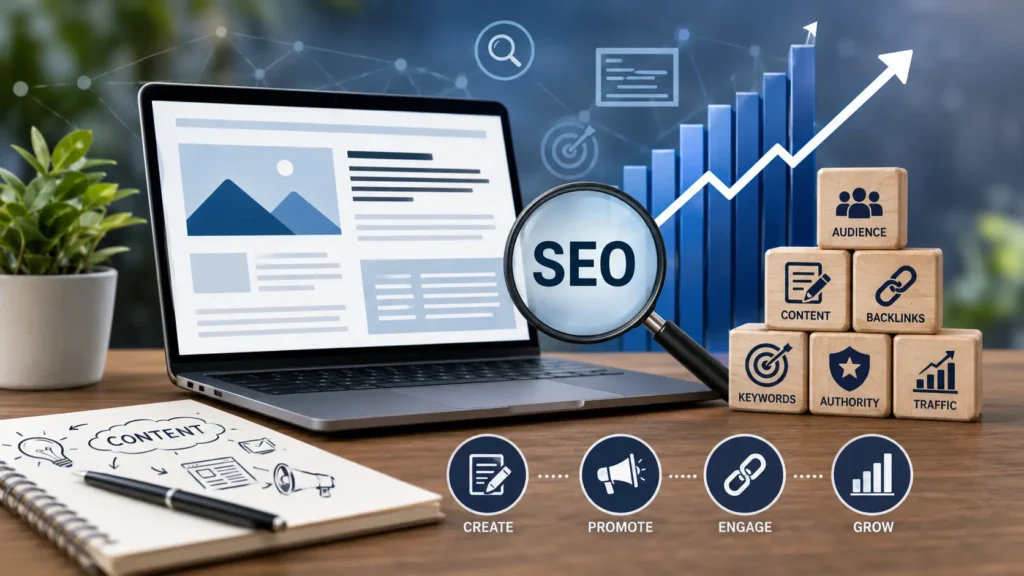
In the ever-evolving digital marketplace, businesses must adopt a comprehensive approach to improving their online visibility. While significant technical SEO elements that improve website performance, such as site speed, mobile responsiveness, and website architecture, remain important, content marketing has become one of the most influential factors in achieving strong search engine performance. Search engines increasingly reward websites that provide meaningful, relevant, and helpful information to users, making content an essential component of any successful SEO strategy.
When businesses consistently create valuable content that aligns with their audience’s needs, they can attract more organic traffic, establish credibility, and improve their search rankings over time. This article explores how content marketing supports SEO efforts and why integrating both strategies is crucial for sustainable online growth.
The Connection Between Content Marketing and SEO
Content marketing and SEO are often viewed as separate disciplines, but they work best when combined. SEO helps search engines understand and rank web pages, while content marketing provides the information that users are actively searching for.
Without quality content, SEO has little substance to optimize. Similarly, even the most informative content may struggle to reach its intended audience if it is not properly optimized for search engines.
Together, these strategies help businesses:
- Increase visibility in search engine results
- Attract highly relevant visitors
- Strengthen brand recognition
- Improve user engagement
- Generate qualified leads
- Support long-term business growth
By aligning content creation with SEO objectives, businesses can build a stronger online presence and deliver greater value to their audience. Understanding the importance of SEO for your business is essential, as effective SEO practices combined with high-quality content marketing can drive sustainable traffic, improve brand authority, and contribute significantly to long-term digital success.
Why Content Plays a Critical Role in Search Rankings
Search engines analyze website content to determine whether a page provides relevant answers to user queries. The quality, depth, and relevance of content influence how search engines evaluate a page’s usefulness.
Effective content helps search engines understand:
- The topic being discussed
- The audience the content serves
- The keywords and phrases associated with the page
- The level of expertise demonstrated
- Whether the information satisfies user expectations
When content thoroughly addresses a topic and delivers a positive user experience, search engines are more likely to rank it prominently in search results.
Expanding Keyword Opportunities Through Content
Keyword optimization remains an important aspect of SEO, and content marketing provides the ideal framework for targeting valuable search terms.
By creating content around relevant topics, businesses can improve their visibility for a broader range of search queries.
Reaching Users Seeking Information
Many consumers begin their online journey by searching for answers, advice, or educational resources. Informative content allows businesses to connect with potential customers during the early stages of decision-making.
Examples include:
- Educational articles
- Step-by-step tutorials
- Industry trend reports
- Expert guides
- Resource collections
Providing helpful information can attract visitors before they are ready to make a purchase, helping build trust and familiarity.
Capturing Long-Tail Search Queries
Long-tail keywords are more specific phrases that often indicate stronger user intent. Although they generally have lower search volumes, they frequently attract highly qualified traffic.
For example, instead of targeting a broad phrase such as “SEO,” businesses may focus on terms like:
- Benefits of content marketing for SEO
- Content optimization strategies for businesses
- Ways content improves search visibility
These targeted phrases often result in higher engagement and better conversion potential.
Supporting Topic-Based SEO Strategies
Search engines increasingly prioritize websites that demonstrate expertise across entire subject areas rather than focusing on isolated keywords.
Creating multiple pieces of content around related themes allows businesses to establish topical authority and improve their chances of ranking for numerous relevant searches.
Enhancing User Experience Through Valuable Content
User experience is a significant factor in modern SEO. Search engines monitor how visitors interact with web pages to assess content quality and relevance.
High-quality content contributes to a positive user experience by:
- Providing clear answers
- Delivering useful insights
- Offering practical solutions
- Improving readability
- Encouraging deeper engagement
When visitors spend more time consuming content and exploring additional pages, search engines often view these behaviors as indicators that the content is valuable and relevant.
Earning High-Quality Backlinks Naturally
Backlinks remain one of the strongest ranking signals in SEO. However, attracting links from reputable websites requires content that others find useful and worth referencing.
Content marketing supports link-building efforts by producing assets that naturally earn attention.
Original Industry Research
Unique studies, surveys, and data-driven reports often attract citations from journalists, bloggers, and industry publications.
Detailed Resource Guides
Comprehensive content frequently becomes a go-to reference for readers seeking in-depth information, increasing the likelihood of earning backlinks.
Expert Thought Leadership
Businesses that publish original perspectives and expert commentary can establish themselves as trusted authorities within their industry.
Shareable Visual Content
Infographics, charts, and visual resources often generate interest and encourage other websites to link back to the original source.
As the quality and value of content increase, so does the potential to acquire authoritative backlinks that strengthen SEO performance.
Aligning Content with Search Intent
Search intent refers to the underlying reason behind a user’s search query. Modern search engines place significant emphasis on delivering results that match user expectations.
Understanding search intent allows businesses to create content that aligns with what users are seeking.
Informational Searches
Users want answers, explanations, or educational content.
Examples:
- What is content marketing?
- How does SEO improve website traffic?
Navigational Searches
Users are looking for a specific website, company, or resource.
Examples:
- Company login pages
- Brand websites
Commercial Research Searches
Users are evaluating products or services before making a decision.
Examples:
- Best SEO tools for businesses
- Top content marketing agencies
Transactional Searches
Users are ready to take action, make a purchase, or request a service.
Examples:
- Hire an SEO consultant
- Purchase SEO software
By developing content for different stages of the customer journey, businesses can attract visitors with varying levels of intent and guide them toward conversion.
Keeping Websites Relevant with Fresh Content
Search engines favor websites that consistently provide updated information. Publishing new content on a regular basis signals that a website remains active and relevant.
Benefits of maintaining fresh content include:
- Increased opportunities for search engine indexing
- Broader keyword coverage
- Improved audience engagement
- Enhanced search visibility
A steady content publishing schedule also encourages search engines to revisit a website more frequently, which can support overall SEO growth.
Establishing Authority Within Your Industry
One of the primary goals of content marketing is to position a business as a trusted source of information. Search engines often reward websites that demonstrate expertise across a particular topic area.
For example, a digital marketing company might publish content covering:
- Search engine optimization
- Content strategy
- Link acquisition
- Local search optimization
- Website analytics
- Conversion optimization
Businesses that focus on reaching more local customers through local SEO can further strengthen their online presence by creating location-specific content that addresses the needs of nearby audiences. Over time, this extensive content coverage helps establish authority and credibility, making it easier to rank for related search terms.
Strengthening Website Structure with Internal Links
Content marketing creates numerous opportunities to improve internal linking across a website.
Internal links help:
- Guide users to related resources
- Improve website navigation
- Assist search engines in understanding page relationships
- Distribute authority throughout the site
- Increase page discovery
For example, an article about content marketing can naturally link to resources discussing keyword research, SEO audits, and content planning. This interconnected structure enhances both user experience and SEO effectiveness.
Supporting Google’s Quality Guidelines
Google emphasizes content that demonstrates experience, expertise, authority, and trustworthiness.
Businesses can reinforce these qualities through content marketing by:
Sharing Industry Expertise
Publishing insights from knowledgeable professionals helps establish credibility.
Demonstrating Practical Experience
Case studies, real-world examples, and success stories showcase hands-on expertise.
Providing Reliable Information
Accurate, well-researched content increases trust among both users and search engines.
Maintaining Transparency
Clear authorship, citations, and factual accuracy contribute to overall credibility.
These signals can positively influence search visibility, especially in competitive industries.
Expanding Reach Through Content Distribution
While social media activity is not a direct ranking factor, it can significantly increase content exposure.
Sharing content across multiple channels can generate:
- Increased website traffic
- Greater brand awareness
- More audience engagement
- Additional backlink opportunities
A strong content marketing strategy extends beyond publication by actively promoting content to reach a wider audience.
Measuring the Impact of Content on SEO
To determine the effectiveness of content marketing efforts, businesses should regularly monitor performance indicators such as:
Organic Search Traffic
Track the number of visitors arriving through search engines.
Keyword Visibility
Monitor rankings for targeted keywords and phrases.
Backlink Acquisition
Measure the quantity and quality of links earned from other websites.
User Engagement
Analyze metrics such as:
- Average session duration
- Bounce rate
- Pages viewed per visit
Lead Generation and Conversions
Evaluate how content contributes to business objectives, including inquiries, sign-ups, and sales.
Consistent analysis helps identify opportunities for improvement and supports long-term SEO success.
Best Practices for Integrating Content Marketing and SEO
To maximize results, businesses should adopt a strategic approach that combines both disciplines.
Perform Comprehensive Keyword Research
Identify topics and search terms that align with audience interests and business goals.
Focus on Audience Needs
Create content that addresses real questions, challenges, and objectives.
Maintain Consistency
Publishing content regularly helps build authority and keeps audiences engaged.
Prioritize Value Over Volume
Well-researched, high-quality content often outperforms large quantities of low-value material.
Optimize Every Content Asset
Ensure content includes relevant headings, metadata, internal links, and keyword optimization. Implementing important on page SEO strategies every business website should implement can further strengthen content performance by improving website structure, enhancing user experience, and helping search engines better understand and rank your pages.
Refresh Existing Content
Updating older pages can improve rankings and maintain relevance.
Promote Content Strategically
Use email marketing, social media, and outreach campaigns to maximize visibility and engagement.
Final Thoughts
Content marketing has become a cornerstone of modern SEO. It helps businesses attract qualified traffic, improve search rankings, establish authority, and create meaningful connections with their target audience. While technical SEO remains essential, content provides the foundation that enables search engines to understand, evaluate, and rank a website effectively.
Organizations that invest in creating informative, engaging, and user-focused content are better positioned to achieve sustainable growth in organic search. By combining strong content marketing practices with a well-executed SEO strategy, businesses can build lasting online visibility and gain a significant competitive advantage.
Grow Your Search Presence with Expert SEO Support
Achieving strong search engine rankings requires more than publishing content. It demands a strategic combination of technical optimization, keyword targeting, content development, and ongoing performance analysis.
If you’re searching for a SEO agency in Watford that can help increase your online visibility and drive measurable business results, Horizon Services provides tailored SEO solutions designed to help businesses attract more qualified traffic, improve rankings, and achieve long-term digital growth.


