
The modern customer journey is more complex than ever before. People no longer discover a brand, make a purchase, and become loyal customers through a single interaction. Instead, they engage with businesses across multiple digital channels before making a decision. A potential customer may find a company through a social media post, conduct further research on Google, and eventually click a paid advertisement before converting.
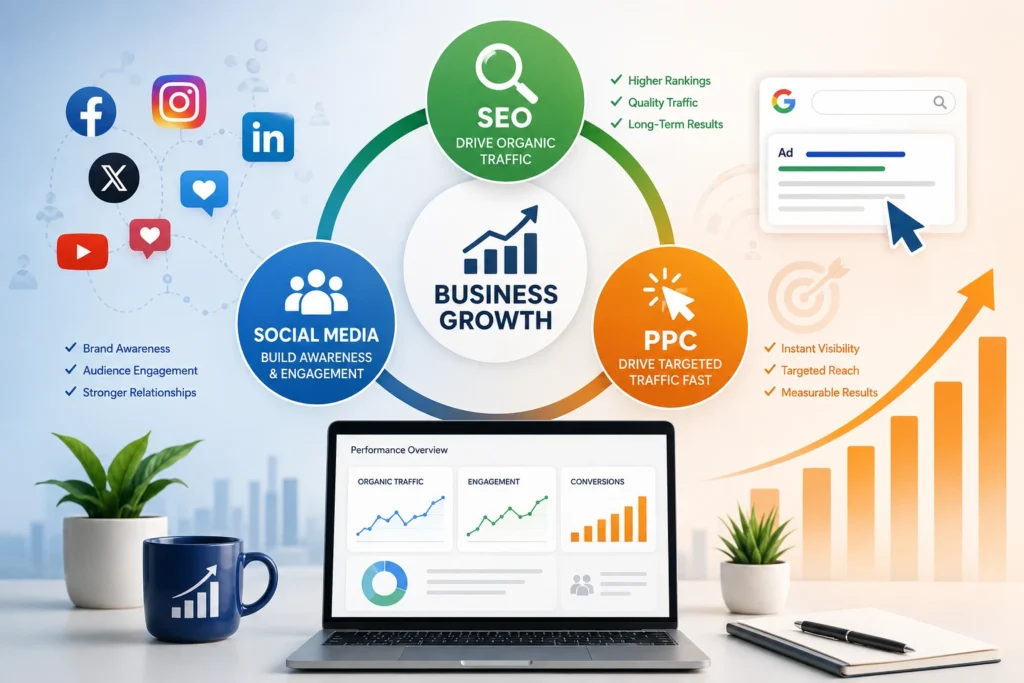
Because of this evolving behavior, businesses need a comprehensive digital marketing strategy that leverages multiple channels working together. Three of the most powerful components of an effective online marketing strategy are Search Engine Optimization (SEO), Social Media Marketing (SMM), and Pay-Per-Click (PPC) advertising.
Although each of these channels can generate results independently, their combined impact is far greater. When integrated effectively, SEO, social media, and PPC help businesses increase online visibility, attract qualified prospects, strengthen brand awareness, and drive sustainable growth.
In this article, we explore how these digital marketing strategies complement one another and why businesses should view them as interconnected parts of a unified marketing approach.
Understanding the Three Core Digital Marketing Channels
Before examining how these strategies work together, it’s important to understand the unique role each one plays.
Search Engine Optimization (SEO)
SEO is the practice of improving a website’s visibility in organic search engine results. By optimizing content, website structure, technical performance, and authority signals, businesses can improve their rankings for relevant search terms.
The primary benefits of SEO include:
- Generating consistent organic traffic
- Increasing online visibility
- Building trust and credibility
- Attracting high-intent users
- Supporting long-term business growth
Unlike paid advertising, SEO delivers lasting value over time and can continue driving traffic long after content is published.
Social Media Marketing
Social media marketing focuses on building relationships and engaging audiences through platforms such as Facebook, Instagram, LinkedIn, YouTube, TikTok, and X.
Businesses use social media to:
- Expand brand awareness
- Connect directly with customers
- Share valuable content
- Promote products and services
- Encourage audience engagement
A strong social media presence helps brands stay visible and relevant in the minds of potential customers.
Pay-Per-Click Advertising (PPC)
PPC is a paid advertising model where businesses pay only when users click on their advertisements. Platforms such as Google Ads, Microsoft Ads, Facebook Ads, and LinkedIn Ads allow businesses to reach highly targeted audiences quickly.
The advantages of PPC include:
- Immediate exposure
- Precise audience targeting
- Faster lead generation
- Measurable campaign performance
- Flexible budget management
PPC is particularly valuable for businesses looking to generate quick results while building their long-term organic presence.
Why a Multi-Channel Marketing Strategy Delivers Better Results
Consumers interact with businesses through numerous online touchpoints before making a purchase decision. Relying on a single marketing channel often limits a company’s ability to reach and influence potential customers throughout this journey.
An integrated strategy that combines SEO, social media, and PPC enables businesses to connect with users at different stages of the buying process.
The typical customer journey includes:
- Brand Discovery
- Information Gathering
- Evaluation
- Purchase Decision
- Ongoing Engagement
Each digital marketing channel contributes uniquely to these stages. Together, they create a more effective and seamless customer experience.
Benefits of integrating these channels include:
- Greater online visibility
- Stronger brand recognition
- Higher-quality traffic
- Improved conversion rates
- Better marketing efficiency
- More comprehensive customer insights
How SEO Enhances Social Media and PPC Campaigns
SEO often serves as the foundation of a successful digital marketing strategy because it provides valuable content and audience insights that can support other marketing efforts.
Creating Content for Multiple Marketing Channels
Successful SEO requires businesses to publish valuable content that answers user questions and addresses their needs.
Examples include:
- Blog articles
- Educational guides
- Industry reports
- Videos
- Case studies
This content can then be repurposed across social media platforms and incorporated into PPC campaigns.
For example:
- A detailed blog post can be promoted through LinkedIn or Facebook.
- A downloadable guide can serve as a lead-generation asset in paid advertising.
- Informative articles can be transformed into social media graphics and videos.
This approach increases the return on investment from content creation efforts.
Improving Website and Landing Page Quality
SEO focuses heavily on enhancing user experience through:
- Faster page loading times
- Mobile-friendly design
- Clear site navigation
- Relevant content
These improvements also benefit PPC campaigns by creating better landing page experiences for visitors.
Optimized landing pages often result in:
- Lower advertising costs
- Improved quality scores
- Increased user engagement
- Higher conversion rates
As a result, SEO contributes directly to the effectiveness of paid advertising campaigns.
Supplying Valuable Search Data
Keyword research is a core element of SEO. By understanding what users search for online, businesses gain valuable insights into audience interests and intent.
These insights can help shape:
- Social media content calendars
- PPC keyword targeting
- Advertising messaging
- New content opportunities
Sharing keyword intelligence across marketing channels helps ensure a more cohesive strategy.
How Social Media Supports SEO and PPC Success
While social signals are not a direct ranking factor for search engines, social media plays an important role in strengthening overall digital marketing performance.
Expanding Content Reach
Even the most valuable content needs promotion to attract attention.
Social media helps businesses distribute content to wider audiences, increasing opportunities for engagement and website visits.
Benefits include:
- Increased traffic
- Greater content exposure
- More brand mentions
- Potential backlink opportunities
The broader the reach, the greater the chance that valuable content will gain traction and authority.
Building Brand Recognition and Trust
People are more likely to engage with brands they recognize and trust.
Regular social media activity helps businesses establish:
- Credibility
- Industry expertise
- Audience loyalty
- Brand familiarity
When users later encounter the business through search results or paid advertisements, prior familiarity often increases the likelihood of conversion.
Strengthening Paid Advertising Results
Social media interactions provide valuable audience data that can improve PPC targeting.
Businesses can use social media engagement to:
- Create custom advertising audiences
- Build lookalike audiences
- Retarget previous visitors
- Promote high-performing content
This enables marketers to serve more relevant advertisements to users who have already shown interest in the brand.
How PPC Complements SEO and Social Media Efforts
While SEO and social media often require time to generate momentum, PPC can produce immediate results.
Delivering Instant Search Visibility
Achieving strong organic rankings takes time and consistent effort. PPC allows businesses to appear prominently in search results almost immediately.
This can help:
- Launch new products
- Generate leads quickly
- Increase brand awareness
- Capture market opportunities
Paid advertising fills visibility gaps while organic marketing efforts continue to mature.
Testing Campaign Strategies Faster
PPC provides real-time performance data that can be used to refine broader marketing strategies.
Businesses can test:
- Ad copy
- Headlines
- Calls to action
- Landing pages
- Promotional offers
Insights gained from PPC testing can then improve SEO content and social media messaging.
For example, a high-performing PPC headline may reveal language that resonates strongly with customers and can be incorporated into future content marketing initiatives.
Re-Engaging Potential Customers
Many website visitors leave without taking immediate action.
Retargeting campaigns allow businesses to reconnect with users who have previously interacted with their website or content.
Retargeting can focus on users who:
- Visited key service pages
- Read blog content
- Downloaded resources
- Engaged with social media content
By staying visible throughout the decision-making process, businesses can improve conversion opportunities and maximize marketing effectiveness.
A Practical Example of Integrated Digital Marketing
To understand how these channels work together, consider a typical customer journey.
Awareness Stage
A user discovers a company through a social media post or a paid advertisement.
This initial interaction introduces the brand and encourages further exploration.
Research Stage
The user visits the website and reads SEO-optimized articles, service pages, and educational resources.
These materials help answer questions and establish trust.
Engagement Stage
The visitor follows the company on social media and continues interacting with its content.
This ongoing engagement strengthens the relationship between the brand and the prospect.
Remarketing Stage
After leaving the website, the visitor sees targeted PPC advertisements that remind them of the business and its offerings.
These ads help maintain visibility and encourage return visits.
Conversion Stage
The user returns to the website and completes a desired action, such as making a purchase, submitting an inquiry, or scheduling a consultation.
Because the customer has interacted with multiple touchpoints, confidence in the brand is significantly higher.
Major Advantages of Combining SEO, Social Media, and PPC
Businesses that integrate these marketing channels often experience several important benefits.
Increased Online Presence
Appearing across search engines, social platforms, and paid advertising networks helps businesses stay visible wherever customers spend time online.
Better Lead Quality
A multi-channel approach attracts users with different levels of intent, resulting in more qualified prospects.
Higher Conversion Rates
Repeated exposure across multiple channels builds familiarity and trust, which can improve conversion performance.
Deeper Audience Insights
Data collected from SEO, social media, and PPC campaigns provides a more complete understanding of customer behavior and preferences.
Improved Competitive Positioning
Businesses that embrace an integrated strategy are often better positioned to compete in crowded digital markets.
Greater Marketing Efficiency
Sharing content, audience insights, and performance data across channels helps maximize marketing investments and reduce wasted effort.
Best Practices for Combining SEO, Social Media, and PPC
Businesses looking to maximize results should consider the following strategies:
Establish Unified Objectives
Ensure all marketing activities support the same business goals and key performance indicators.
Maintain Consistent Branding
Use consistent messaging, visual identity, and value propositions across all channels.
Share Data Across Teams
Encourage collaboration between SEO, social media, and PPC specialists to improve campaign performance.
Repurpose High-Performing Content
Extend the value of content by adapting it for multiple platforms and audiences.
Continuously Measure and Optimize
Monitor performance indicators such as:
- Organic search traffic
- Social media engagement
- Paid advertising conversions
- Lead generation metrics
- Customer acquisition costs
Regular analysis helps identify opportunities for improvement and growth.
Final Thoughts
SEO, social media marketing, and PPC advertising each play a valuable role in digital marketing, but their true strength lies in working together. SEO establishes long-term visibility, social media builds meaningful audience connections, and PPC provides immediate reach and targeted traffic. If you’re still evaluating why investing in digital marketing is crucial for your business, understanding how these three channels complement one another provides a clear answer. More importantly, businesses focused on building brand awareness through digital marketing can use this integrated approach to create consistent visibility across search engines, social platforms, and paid advertising. When combined into a unified strategy, these channels create a powerful marketing ecosystem that attracts prospects, nurtures relationships, and drives conversions. Businesses that leverage all three effectively are better equipped to increase brand awareness, generate qualified leads, and achieve long-term business success.
When integrated into a unified strategy, these channels create a powerful marketing ecosystem that attracts prospects, nurtures relationships, and drives conversions. Businesses that leverage all three effectively are better equipped to increase brand awareness, generate qualified leads, and achieve long-term business success.
Grow Your Business with a Complete Digital Marketing Strategy
Success in today’s digital environment requires more than a single marketing tactic. Horizon Services, a Watford-based full-service digital agency, helps businesses create integrated SEO, social media, and PPC campaigns designed to generate measurable growth and long-term results.
Hire a digital marketing expert in Watford and discover how a data-driven digital marketing strategy can help your business attract more customers, increase conversions, and stay ahead of the competition.


