
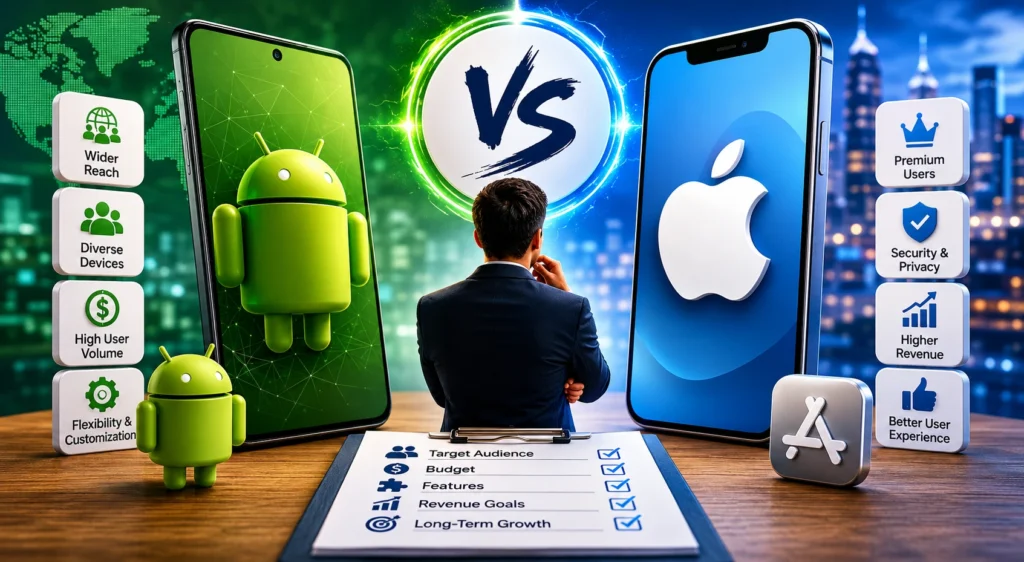
Mobile applications have become a critical part of modern business growth strategies. Whether you run a startup, an eCommerce store, a service-based company, or a large enterprise, a well-designed mobile app can improve customer engagement, strengthen brand loyalty, and create new revenue opportunities.
One of the first decisions businesses face when planning an app is choosing between Android and iOS development. Both platforms offer unique advantages, but the right choice depends on factors such as your target audience, budget, business objectives, and geographic market.
This guide explores the key differences between Android and iOS app development to help you identify the platform that aligns best with your business needs.
The Importance of Choosing the Right Mobile Platform
Your choice of mobile operating system influences everything from development costs and launch timelines to user acquisition and revenue generation. Selecting the wrong platform can limit your market reach, while choosing the right one can accelerate business growth and improve customer satisfaction.
Understanding the strengths and limitations of Android and iOS is essential before investing in app development.
An Overview of Android and iOS
Android is Google’s mobile operating system and powers smartphones from a wide range of manufacturers, including Samsung, Xiaomi, Oppo, Vivo, Motorola, and OnePlus. It dominates the global smartphone market and serves users across nearly every region of the world.
iOS is Apple’s proprietary operating system designed exclusively for iPhones and iPads. Although it has a smaller share of the worldwide market, it remains highly influential in countries with strong purchasing power, such as the United Kingdom, United States, Canada, and Australia.
Both platforms offer powerful development environments and extensive app ecosystems, making them excellent choices depending on your business objectives.
Audience Reach and Market Penetration
Android: Access to a Larger Global Market
Android’s biggest advantage lies in its extensive worldwide reach. Because Android devices are available at various price points, they appeal to a broad range of consumers.
Benefits of Android market reach include:
- Greater global smartphone penetration
- Strong adoption in developing and emerging economies
- Availability across budget, mid-range, and premium devices
- Access to a highly diverse customer base
Businesses focused on large-scale customer acquisition often view Android as the preferred platform due to its broad accessibility.
iOS: A More Premium Customer Base
Although iOS serves a smaller audience globally, its users often represent a highly valuable consumer segment.
Advantages of targeting iOS users include:
- Strong presence in affluent markets
- Higher average customer spending
- Greater brand loyalty
- Increased engagement with mobile applications
Companies offering premium products or services frequently prioritize iOS because of the purchasing power of its user base.
Development Investment and Project Costs
Android Development Considerations
Creating an Android application often requires accommodating numerous device types, screen sizes, and operating system versions. Understanding the significance of investing in android app development services helps businesses make informed decisions about budgeting, scalability, and long-term growth while taking advantage of Android’s extensive global market reach.
This can involve:
- Additional testing requirements
- Compatibility checks across multiple devices
- Optimization for varying hardware specifications
- Support for numerous Android versions
These factors can contribute to longer testing cycles and increased development effort.
iOS Development Considerations
Apple’s ecosystem is significantly more controlled, with fewer devices and software variations to support.
This often leads to:
- More streamlined development processes
- Easier quality assurance testing
- Consistent performance across devices
- Reduced complexity during updates
As a result, many development teams find iOS projects easier to manage from a technical standpoint.
Revenue Generation Potential
A successful app should not only attract users but also contribute to business growth and profitability.
Android Monetization Opportunities
The vast Android user base provides opportunities to generate revenue through:
- Mobile advertising
- Freemium app models
- Subscription services
- Digital marketplaces
- In-app purchases
Businesses relying on high user volume often benefit from Android’s extensive reach.
iOS Monetization Advantages
iOS users are generally known for spending more on digital products and services.
Common benefits include:
- Higher in-app purchase rates
- Stronger subscription conversion
- Increased customer lifetime value
- Better premium product adoption
For businesses focused on direct app revenue, iOS often delivers stronger monetization performance per user.
User Experience and Interface Design
Android’s Flexible Design Environment
Android offers developers considerable freedom when creating custom user experiences.
Advantages include:
- Highly customizable interfaces
- Flexible navigation systems
- Diverse design possibilities
- Enhanced personalization options
This flexibility allows businesses to tailor their apps to specific customer preferences and brand identities.
iOS’s Consistent User Experience
Apple emphasizes simplicity, consistency, and ease of use throughout its ecosystem.
Key benefits include:
- Standardized user interactions
- Clean interface guidelines
- Smooth performance optimization
- Strong focus on usability
This consistency often contributes to high customer satisfaction and engagement.
Development Time and Speed to Market
Android Development Timelines
Because Android applications must support numerous devices and configurations, development and testing can require additional time.
Common factors include:
- Device compatibility testing
- Multiple screen resolutions
- Hardware-specific adjustments
- Version-specific troubleshooting
These requirements may extend the timeline for project completion.
iOS Development Timelines
The limited number of Apple devices simplifies development and quality assurance.
Advantages include:
- Faster testing procedures
- Easier bug identification
- Quicker deployment cycles
- More predictable development schedules
For businesses aiming to launch quickly, iOS can sometimes provide a faster route to market.
Security and Data Protection
Security is a major concern for businesses handling customer information, payment details, or confidential data.
Android Security Features
Google continues to strengthen Android security through technologies such as:
- Google Play Protect
- Enhanced privacy controls
- Secure application permissions
- Regular security updates
However, Android’s open ecosystem can expose users to additional risks if apps are downloaded from unofficial sources. Understanding the importance of security in android app development helps businesses implement robust security measures, protect sensitive user data, comply with industry regulations, and build long-term trust with their customers.
iOS Security Strengths
Apple maintains a tightly controlled ecosystem that emphasizes privacy and security.
Notable features include:
- Strict application review standards
- Built-in encryption technologies
- Controlled software distribution
- Frequent security enhancements
Many organizations operating in regulated industries consider iOS a strong choice for safeguarding sensitive information.
App Store Distribution and Approval
Publishing on Google Play
Google Play generally offers a more flexible submission process.
Benefits include:
- Faster app approvals
- Simplified update deployment
- Greater publishing flexibility
- Quicker market entry
This can be particularly useful for businesses that frequently release updates and new features.
Publishing on the Apple App Store
Apple enforces more rigorous review procedures before applications are approved.
Advantages include:
- Higher quality standards
- Greater consumer trust
- Reduced presence of low-quality applications
- Improved ecosystem reliability
Although the review process may take longer, it often enhances user confidence in approved applications.
Long-Term Maintenance Requirements
Launching an app is only the beginning. Ongoing maintenance is necessary to ensure performance, security, and compatibility.
Android Maintenance
Android developers must account for:
- Multiple hardware manufacturers
- Various operating system versions
- Device-specific performance issues
- Diverse screen dimensions
These factors can increase long-term maintenance responsibilities.
iOS Maintenance
Apple’s standardized ecosystem makes post-launch support more straightforward.
Benefits include:
- Faster adoption of software updates
- Consistent hardware compatibility
- Reduced fragmentation challenges
- Simplified testing procedures
This often results in more predictable maintenance costs.
Which Platform Should You Choose?
Android May Be the Better Choice If:
- Your goal is maximum audience reach.
- You target users across multiple countries and income groups.
- Advertising revenue is a significant business model component.
- Affordability and accessibility are important.
- You want broad device coverage.
iOS May Be the Better Choice If:
- You focus on premium customers.
- Your primary market is the UK, US, Canada, or Australia.
- Subscription revenue is a key objective.
- Security and privacy are major priorities.
- You want to target high-spending users.
Why Many Businesses Invest in Both Platforms
For many organizations, the ideal solution is not choosing one platform over the other but developing for both Android and iOS.
Advantages of a dual-platform strategy include:
- Expanded market coverage
- Improved customer accessibility
- Increased brand visibility
- Greater revenue opportunities
- Stronger competitive positioning
Modern frameworks such as Flutter and React Native have made cross-platform development more efficient, allowing businesses to serve both audiences while controlling costs.
Emerging Trends in Mobile App Development
The future of mobile applications continues to evolve rapidly. Businesses investing in mobile technology should pay attention to trends such as:
- Artificial Intelligence integration
- Machine learning-powered personalization
- Augmented Reality experiences
- Voice-enabled applications
- Mobile commerce innovation
- Wearable device connectivity
- Predictive analytics
Leveraging these technologies can help businesses create more engaging and competitive mobile experiences.
Final Thoughts
The decision between Android and iOS development should be guided by your business goals, target audience, revenue strategy, and market focus.
Android provides unparalleled reach and flexibility, making it an excellent option for businesses seeking widespread adoption. iOS offers strong customer engagement, premium demographics, and impressive monetization opportunities.
In many cases, supporting both platforms can provide the best balance between growth, profitability, and customer satisfaction.
Build a Powerful Android App with Horizon Services
A successful mobile application requires more than great ideas—it demands expert planning, intuitive design, and robust development. Horizon Services, a full-service digital agency based in Watford, UK, helps businesses create innovative Android applications that deliver measurable results.
From startups launching their first mobile product to established businesses expanding their digital presence, our experienced development team builds scalable, secure, and user-focused Android solutions tailored to your objectives.
If you’re ready to transform your app concept into a successful digital product, hire android app developers in Watford and partner with Horizon Services to create an Android application that drives customer engagement, business growth, and long-term success.


