
In the modern digital world, user expectations are constantly rising. Whether someone is browsing a website, using a mobile app, or interacting with a software platform, they expect smooth, intuitive, and visually appealing experiences. If these expectations are not met, users quickly leave, resulting in poor engagement, higher bounce rates, and lost opportunities.
UI (User Interface) and UX (User Experience) design play a critical role in shaping how users interact with digital products. Today, design is no longer just about appearance—it is about creating meaningful, efficient, and enjoyable user journeys that keep people engaged and encourage them to take action. Understanding the significance of investing in UI/UX design services helps businesses create digital experiences that not only satisfy user expectations but also drive long-term engagement, higher conversions, and stronger customer loyalty. Businesses that understand the impact of UI/UX design on conversion rates are better positioned to optimize user journeys, reduce friction, and turn more visitors into loyal customers.
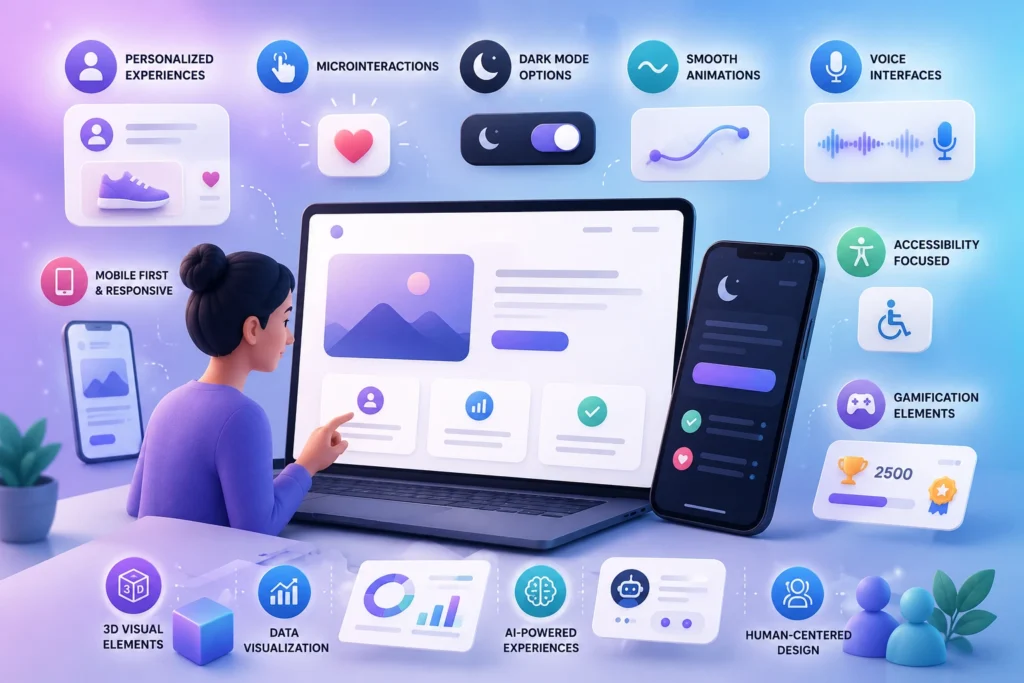
As technology continues to evolve, new design trends are reshaping digital experiences across industries. Businesses that adapt to these trends can significantly improve engagement, retention, and conversions.
Below are the most impactful UI/UX design trends that are currently driving better user engagement.
The Importance of UI/UX in Driving Engagement
Before exploring trends, it’s essential to understand why UI/UX design is so closely linked to user engagement.
Good design helps businesses:
- Keep users on the website longer
- Increase conversion rates and leads
- Reduce bounce rates
- Improve satisfaction and usability
- Build trust and brand credibility
- Encourage repeat visits
- Strengthen customer loyalty
When users can easily navigate a platform and accomplish their goals without confusion, they are far more likely to interact deeply with the content or services offered.
Tailored and Personalized Digital Experiences
Personalization has become a major focus in modern UX design. Users now expect digital platforms to adapt to their preferences and behavior.
With the help of AI and data-driven insights, businesses can now deliver highly customized experiences.
Examples include:
- Personalized product suggestions
- Location-based content
- Custom dashboards for users
- Behavior-based notifications
- Dynamic content adjustments
When a platform feels relevant to individual users, engagement naturally increases.
Key advantages:
- More relevant user experience
- Higher conversion rates
- Improved customer satisfaction
- Stronger user retention
Simple and Minimal Interface Design
Minimalism continues to dominate UI design because it improves clarity and usability. Instead of overwhelming users with too many elements, modern designs focus on simplicity and clean structure.
Core elements of minimal design:
- Clear layouts with spacing
- Simple navigation systems
- Limited and balanced color usage
- Strong visual hierarchy
- Reduced clutter
A clean interface helps users quickly understand content and perform actions without distraction.
Why it improves engagement:
Users can navigate faster, complete tasks easily, and enjoy a smoother experience overall.
Microinteractions for Better Feedback
Microinteractions are small, subtle design responses that occur when users interact with an interface. They play a key role in making digital experiences feel more alive and responsive.
Common examples:
- Button hover animations
- Loading indicators
- Swipe confirmations
- Progress animations
- Like or reaction effects
These small details help guide users and confirm their actions.
Benefits:
- Better usability
- Improved interaction feedback
- Higher user satisfaction
- Increased engagement levels
Growing Popularity of Dark Mode
Dark mode has become a standard feature across apps and websites. It provides a visually comfortable alternative to traditional light interfaces.
Advantages of dark mode:
- Reduces eye strain
- Saves battery life on OLED screens
- Enhances modern visual appeal
- Improves readability in low light
Allowing users to switch themes gives them more control over their experience, which increases satisfaction and engagement.
Meaningful Animations and Motion Design
Animation in UI design is no longer just decorative—it now serves functional purposes. Motion design helps users understand transitions and interactions more clearly.
Practical uses include:
- Smooth page transitions
- Interactive onboarding experiences
- Product demonstrations
- Navigation guidance
- Storytelling elements
Impact:
Well-planned animations make interfaces more intuitive and enjoyable, leading to better engagement.
Rise of Voice-Based Interfaces
Voice interaction is becoming increasingly common with the growth of smart devices and virtual assistants. Users are now comfortable using voice commands for digital interactions.
Examples:
- Voice search features
- Voice navigation systems
- AI-powered assistants
- Conversational interfaces
Benefits:
- Hands-free convenience
- Faster interactions
- Greater accessibility
- Improved usability for diverse users
Voice UI enhances accessibility and expands user reach.
Accessibility-Focused Design
Accessibility is now a fundamental part of modern UI/UX design. Digital products must be usable by people with different abilities and needs.
Key accessibility features:
- Keyboard-friendly navigation
- Screen reader support
- High contrast color options
- Text alternatives for images
- Accessible form design
Why it matters:
Accessible designs improve usability for all users, not just those with disabilities.
Benefits:
- Wider audience reach
- Better compliance with standards
- Improved usability for everyone
- Stronger brand reputation
Interactive Scrolling Experiences
Scrolling has evolved into an interactive storytelling tool that keeps users engaged as they move through a webpage.
Popular techniques:
- Parallax scrolling effects
- Scroll-triggered animations
- Gradual content reveals
- Story-based page structures
Engagement impact:
These techniques encourage users to explore more content, increasing time spent on the page.
AI-Powered UX Enhancements
Artificial intelligence is transforming the way users interact with digital platforms. AI enables systems to adapt and respond in real time.
Examples include:
- Intelligent chatbots
- Predictive search suggestions
- Personalized recommendations
- Automated customer support
- Smart content delivery
Benefits:
AI reduces effort for users and helps them find what they need faster, boosting engagement significantly.
Mobile-First and Responsive Experiences
With most users accessing websites via mobile devices, mobile-first design has become essential.
Key principles:
- Mobile-optimized layouts
- Touch-friendly interfaces
- Fast loading speeds
- Responsive adaptability
- Simplified navigation
Why it matters:
A consistent experience across devices ensures users remain engaged regardless of screen size.
Interactive 3D Visual Elements
Modern web technologies now allow designers to integrate interactive 3D elements into digital experiences.
Use cases:
- Product visualization tools
- Virtual product tours
- Interactive brand experiences
- 3D storytelling elements
Benefits:
3D visuals capture attention and encourage users to explore content more deeply.
Data Visualization for Better Understanding
Users often need to process large amounts of information quickly. Interactive data visualization helps simplify complex data.
Examples:
- Interactive graphs
- Dashboards with real-time updates
- Visual analytics tools
- Data comparison charts
Benefits:
- Easier comprehension of information
- Faster decision-making
- Higher engagement with data-driven content
Human-Centered and Inclusive Design
Modern UX design focuses heavily on understanding real user needs and designing experiences that feel natural and inclusive.
Core principles:
- User research and feedback
- Empathy-driven design
- Inclusive interfaces
- Real-world usability focus
Impact:
When users feel understood, they are more likely to engage and trust the platform.
Gamification for Engagement
Gamification introduces game-like elements into non-gaming environments to improve user motivation and participation.
Examples:
- Reward systems
- Progress tracking
- Achievement badges
- Challenges and milestones
Benefits:
Gamification makes user interactions more enjoyable and encourages continued engagement.
Avoiding Common UI/UX Mistakes
While adopting trends is useful, it’s important to implement them carefully. Even the most innovative design features can negatively impact user engagement if they are poorly executed. Understanding the most common UI/UX design errors that could be hurting your business revenue can help businesses identify usability issues, improve customer experiences, and maximize conversion opportunities.
Avoid:
- Overcomplicated interfaces
- Excessive animations
- Ignoring accessibility requirements
- Poor mobile optimization
- Inconsistent design patterns
- Focusing only on visuals instead of usability
Good UX is always about balance between creativity and functionality.
Final Thoughts
UI/UX design is constantly evolving, driven by user behavior and technological innovation. Trends like personalization, AI integration, accessibility-first design, minimalist interfaces, and immersive interactions are shaping the future of digital experiences.
However, the real goal is not to follow every trend blindly, but to create user-friendly, meaningful, and seamless experiences that solve problems and add value.
Businesses that invest in strong UI/UX design strategies can significantly improve engagement, conversions, and customer loyalty.
Elevate Your Digital Presence with Expert UI/UX Design
Creating a visually appealing website is only part of the equation. To truly engage users and drive business growth, you need a strategic approach that combines research, usability, accessibility, and conversion-focused design.
At Horizon Services, our Watford-based digital agency specializes in crafting user-centered digital experiences that help businesses attract, engage, and convert customers. Whether you need a website redesign, mobile app interface, user research, or complete digital product design, our team delivers the best UI/UX design solutions tailored to your business goals.
Contact Horizon Services today and discover how exceptional UI/UX design can elevate your brand and improve customer engagement.


