
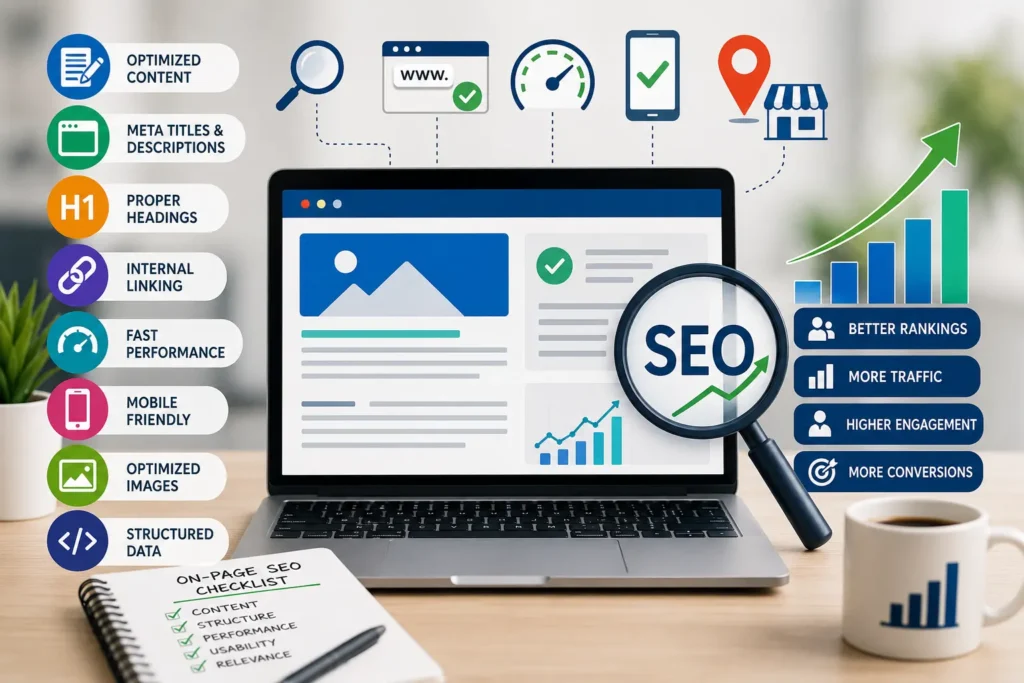
Having a business website is only the first step toward building a successful online presence. To attract potential customers and generate consistent traffic, your website must be optimized for search engines and users alike. This is where on-page SEO plays a critical role.
On-page SEO involves optimizing the elements within your website to improve visibility in search engine results and enhance user experience. Unlike off-page SEO, which focuses on backlinks and external promotion, on-page SEO gives businesses direct control over how their website performs in search rankings.
From content optimization and page structure to mobile responsiveness and loading speed, every aspect of on-page SEO contributes to better search visibility and higher engagement. Alongside these practices, paying attention to important technical SEO elements such as crawlability, site architecture, XML sitemaps, and Core Web Vitals ensures that search engines can efficiently access, understand, and rank your website. Businesses that invest in both on-page optimization and technical SEO often experience improved traffic, stronger brand awareness, and increased conversions.
Understanding the importance of SEO for your business is essential, as it directly impacts how easily potential customers can discover your services online.
In this guide, we’ll discuss the most important on-page SEO techniques every business website should adopt to stay competitive in today’s digital marketplace.
Create Optimized and Engaging Page Titles
Page titles are among the most influential SEO elements because they help search engines identify the topic of a webpage. They also play a major role in convincing users to click on your website in search results.
Tips for Writing Effective Page Titles:
- Keep titles concise and relevant
- Include your primary keyword naturally
- Place important keywords toward the beginning
- Make titles appealing to readers
- Avoid repetitive keyword usage
Example:
Optimized Title:
“Professional Digital Marketing Services for Small Businesses”
Poorly Optimized Title:
“Digital Marketing | Marketing Services | Best Marketing Company”
A compelling title improves both rankings and click-through rates.
Craft Informative Meta Descriptions
Meta descriptions provide a brief summary of your webpage content in search results. While they may not directly affect rankings, they strongly influence whether users decide to visit your website.
Best Practices for Meta Descriptions:
- Keep descriptions within 150–160 characters
- Add relevant keywords naturally
- Clearly explain the page value
- Include a persuasive call to action
Example:
“Boost your online visibility with customized SEO and digital marketing strategies designed for growing businesses.”
Well-written meta descriptions encourage higher engagement from search users.
Organize Content with Proper Headings
A structured heading format makes your content easier to understand for both users and search engines. Clear headings improve readability and help search engines identify important topics on the page.
Recommended Heading Practices:
- Use a single H1 heading per page
- Divide sections using H2 and H3 tags
- Add keywords where they fit naturally
- Make headings descriptive and user-friendly
A well-organized page structure improves the overall browsing experience.
Publish Valuable and Original Content
Content remains one of the strongest ranking factors in SEO. Websites that provide useful, informative, and relevant content are more likely to perform well in search results. Understanding the significance of content marketing in SEO success can help businesses develop strategies that not only improve search rankings but also build trust, engage audiences, and establish long-term authority within their industry.
Features of High-Quality SEO Content:
- Unique and original information
- Solutions to customer problems
- Clear and readable formatting
- Informative and actionable insights
- Regular updates to maintain relevance
Businesses should focus on delivering value instead of creating content solely for search engines.
Content Optimization Suggestions:
- Use keywords naturally throughout the content
- Include bullet points and subheadings
- Add examples and practical insights
- Answer common customer questions
- Keep content detailed and informative
Comprehensive content tends to rank better because it addresses user intent more effectively.
Use SEO-Friendly URL Structures
URLs help search engines and users understand the purpose of a webpage. Clean and simple URLs contribute to better usability and SEO performance.
Example of a Good URL:
www.example.com/business-seo-tips
Example of a Poor URL:
www.example.com/page123?id=45
URL Optimization Tips:
- Keep URLs short and readable
- Include target keywords when relevant
- Avoid unnecessary characters or numbers
- Separate words using hyphens
Simple URLs improve navigation and search engine understanding.
Enhance Website Speed and Performance
Website loading speed is essential for both SEO and user satisfaction. Slow websites can frustrate visitors and increase bounce rates.
Ways to Improve Site Speed:
- Compress large images
- Reduce unnecessary scripts
- Enable browser caching
- Choose quality web hosting
- Use content delivery networks (CDNs)
Faster websites create a smoother experience and often perform better in search rankings.
Ensure Your Website Is Mobile-Friendly
Most internet users now browse websites through smartphones and tablets. Search engines prioritize mobile-optimized websites, making responsive design essential.
Mobile Optimization Best Practices:
- Use responsive layouts
- Optimize content for smaller screens
- Improve mobile loading speed
- Ensure buttons are easy to click
- Avoid intrusive pop-ups
A mobile-friendly website helps businesses engage visitors across all devices.
Optimize Images for SEO
Images improve visual appeal and user engagement, but unoptimized images can slow down a website and impact performance.
Image Optimization Techniques:
- Use descriptive image file names
- Add keyword-rich alt text
- Compress images without losing quality
- Use modern formats like WebP
- Enable lazy loading
Example:
Optimized File Name:
business-seo-strategies.jpg
Poor File Name:
image001.jpg
Proper image optimization improves accessibility and search engine visibility.
Build a Strong Internal Linking Structure
Internal links connect different pages within your website, helping search engines understand the relationship between your content.
Advantages of Internal Linking:
- Improves website navigation
- Helps distribute page authority
- Encourages users to explore more pages
- Supports faster indexing by search engines
Internal Linking Tips:
- Use meaningful anchor text
- Link relevant pages naturally
- Avoid excessive linking
- Highlight important pages strategically
An effective internal linking strategy strengthens overall site SEO.
Improve Overall User Experience
User experience has become an important ranking factor in modern SEO. Websites that are easy to navigate and visually appealing tend to perform better.
Elements of a Good User Experience:
- Clear navigation menus
- Readable fonts and layouts
- Fast-loading pages
- Mobile responsiveness
- Easy-to-find contact information
Ways to Improve UX:
- Simplify website design
- Use sufficient spacing between sections
- Add clear calls to action
- Make content easy to scan
Positive user experiences can increase engagement and conversion rates.
Implement Structured Data Markup
Structured data, also known as schema markup, helps search engines better interpret your website content.
Common Types of Schema Markup:
- Business information
- FAQs
- Reviews and ratings
- Articles and blog posts
- Product listings
Using schema can improve how your website appears in search results through rich snippets and enhanced listings.
Strengthen Local SEO Optimization
Businesses serving local customers should optimize their websites for location-based searches.
Important Local SEO Strategies:
- Include location-specific keywords
- Create dedicated local service pages
- Maintain consistent contact information
- Optimize Google Business Profile
- Encourage customer reviews
Local SEO helps businesses in reaching more local customers through local SEO, especially those actively searching for services within their area.
Use Keywords Naturally Throughout Content
Keywords help search engines identify page topics, but overusing them can negatively affect readability and rankings.
Key Areas for Keyword Placement:
- Page titles
- Meta descriptions
- Headings
- Introductory paragraphs
- Image alt text
- URLs
Modern SEO focuses on relevance and natural language rather than keyword stuffing.
Refresh and Update Existing Content
Regularly updating website content helps maintain relevance and improve search performance over time.
Content Updating Ideas:
- Add current information and statistics
- Improve readability and formatting
- Expand thin or outdated sections
- Add new keywords where relevant
- Update internal links
Fresh content signals value and relevance to search engines.
Include Strong Calls to Action
Every business website should guide users toward taking meaningful actions.
Examples of Effective CTAs:
- Contact our team today
- Request a free consultation
- Learn more about our services
- Get a customized quote
Strategic calls to action help improve lead generation and conversions.
The Importance of On-Page SEO for Businesses
On-page SEO helps businesses build stronger online visibility and attract targeted traffic from search engines. Proper optimization not only improves rankings but also enhances user engagement and website performance.
Benefits of effective on-page SEO include:
- Increased organic traffic
- Better search engine visibility
- Improved user experience
- Higher lead generation potential
- Stronger brand credibility
Businesses that consistently optimize their websites are more likely to achieve long-term digital growth.
Conclusion
On-page SEO is a vital part of any successful digital marketing strategy. From optimizing content and headings to improving website speed and usability, every optimization effort contributes to better search performance and customer engagement.
By implementing the right SEO practices, businesses can improve their rankings, attract more qualified visitors, and create better online experiences for users.
If you’re looking for professional support to improve your website’s search performance and grow your online presence, working with experts can help you achieve faster and more sustainable results.Searching for a reliable SEO company in Watford to elevate your digital marketing strategy? Horizon Services offers complete digital solutions including SEO, web design, content marketing, and online growth strategies tailored to help businesses succeed online.


