
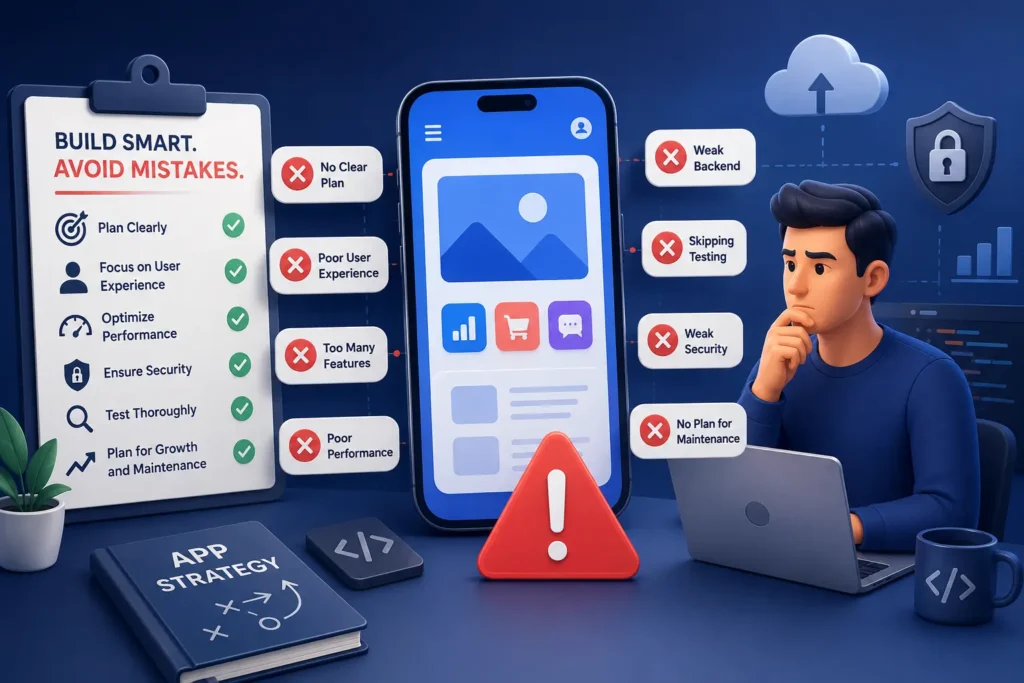
In today’s digital-first economy, mobile applications have become essential tools for businesses of all sizes. They help brands connect with customers, increase sales, enhance service delivery, and build long-term loyalty. However, despite the growing importance of mobile apps, many businesses still make avoidable mistakes during the development process.
These errors often result in poor performance, weak user engagement, negative reviews, and unnecessary financial loss. Understanding these common pitfalls can help businesses create more effective, scalable, and user-friendly mobile applications.
Below are the key mobile app development mistakes companies should avoid.
Beginning Development Without a Clear Plan
One of the most frequent mistakes businesses make is starting app development without a defined strategy. Many organizations rush into building an app simply because it seems necessary or because competitors already have one.
However, a successful mobile application must be built around a clear objective, such as:
- Increasing revenue or conversions
- Enhancing customer engagement
- Improving internal business operations
- Strengthening brand presence
Without a structured plan, the development process becomes scattered. This often results in unnecessary features, unclear direction, and poor return on investment. A well-planned roadmap ensures that every feature contributes to a specific business goal. Before discussing your project with potential vendors, preparing a list of questions to ask before choosing a mobile app development company can help you evaluate whether they understand your business objectives and have the expertise to turn your vision into a successful application.
Neglecting User Experience Design
User experience plays a critical role in determining whether an app succeeds or fails. Unfortunately, many businesses underestimate its importance and focus mainly on appearance rather than usability.
Typical UX mistakes include:
- Complex and confusing navigation systems
- Excessive steps for simple actions
- Overcrowded screens with too much information
- Inconsistent layout and design elements
Modern users expect apps to be smooth, intuitive, and effortless to use. If they struggle to understand or navigate the app within moments, they are likely to abandon it.
Effective UX design ensures simplicity, clarity, and ease of interaction, making it effortless for users to achieve their goals.
Choosing the Wrong Development Approach
Selecting an inappropriate development method can significantly affect both cost and performance. Many businesses make decisions without fully understanding their options.
Common errors include:
- Building for only one platform without analyzing user distribution
- Selecting native development when a cross-platform solution would be more efficient
- Overlooking device compatibility and user accessibility
Whether choosing native, hybrid, or cross-platform development, the decision should be based on target audience behavior, budget limitations, and functional requirements. Businesses that are choosing between native and hybrid mobile app for your business should carefully evaluate the advantages and limitations of each approach before making a decision. A wrong choice can lead to increased costs, inconsistent app performance across devices, and unnecessary development challenges.
Adding Too Many Features at Once
A common misconception is that more features automatically make an app better. In reality, excessive features often create confusion and reduce usability.
Feature overload can lead to:
- Slower application performance
- Difficult and overwhelming navigation
- Higher maintenance and development expenses
- Reduced user engagement and satisfaction
Successful apps focus on core functionality first. They prioritize solving key user problems effectively. Additional features can always be introduced later based on user feedback and behavioral data.
Weak or Unscalable Backend Systems
The backend is the foundation of any mobile application. If it is poorly designed, the entire app suffers in terms of speed, reliability, and scalability.
Common backend issues include:
- Poorly structured databases
- Lack of scalability planning for future growth
- Weak API integration practices
- Insufficient attention to security architecture
As the number of users grows, the system must be able to handle increased traffic smoothly. A strong backend ensures stability, faster response times, and long-term performance consistency.
Ignoring Performance Optimization
Application speed and responsiveness have a direct impact on user satisfaction. Users expect apps to load quickly and function without delays.
Slow performance often results in:
- Higher uninstall rates
- Negative ratings in app stores
- Reduced user retention
Performance problems usually arise from unoptimized images, inefficient code, excessive background processes, or poor database queries. Ensuring performance optimization from the beginning helps create a smooth and enjoyable user experience.
Skipping Proper Testing Phases
Releasing an app without thorough testing is a serious mistake that can damage credibility and user trust.
Essential testing types include:
- Functionality testing
- User experience testing
- Performance and load testing
- Security validation
- Compatibility testing across devices
When testing is rushed or ignored, bugs and crashes become common after launch, leading to negative reviews and loss of users. Proper testing ensures reliability and a polished final product.
Weak Security Measures
Mobile applications often store sensitive user data, including personal details and payment information. If security is not properly implemented, it can lead to serious risks.
Common security shortcomings include:
- Lack of encryption for sensitive data
- Weak authentication and login systems
- Insecure APIs
- Improper data storage practices
Security should always be a core part of development, not something added later. Strong security builds user trust and protects business reputation.
No Plan for Long-Term Maintenance
Many businesses treat app development as a one-time project, but mobile apps require continuous improvement to stay relevant.
Ongoing maintenance includes:
- Fixing bugs and technical issues
- Updating features based on user needs
- Improving speed and performance
- Ensuring compatibility with new operating system updates
- Enhancing user experience over time
Without regular updates, even a well-built app can quickly become outdated and lose its user base.
Ignoring User Feedback and Data Insights
User feedback provides valuable insights into how an app is performing in real-world usage. Unfortunately, many businesses fail to actively collect or analyze this information.
Ignoring feedback can result in:
- Missed opportunities for improvement
- Lower customer satisfaction
- Increased user drop-off rates
Similarly, analytics help track user behavior, such as feature usage, engagement time, and drop-off points. Data-driven decision-making is essential for continuous improvement and long-term success.
Poor Visibility in App Stores
Even a well-developed application can fail if users cannot find it. App Store Optimization (ASO) is often overlooked but is essential for visibility and downloads.
Common ASO mistakes include:
- Weak or unclear app titles and descriptions
- Poor keyword optimization
- Low-quality screenshots and visuals
- Lack of review generation strategies
Without proper optimization, even high-quality apps struggle to reach their target audience.
Selecting an Inexperienced Development Team
Choosing the wrong development partner is one of the most costly mistakes businesses can make. The quality of your app largely depends on the expertise of the team behind it, which is why choosing right mobile app development agency is a crucial step in ensuring your project is delivered on time, within budget, and built to meet long-term business objectives.
An inexperienced team may lead to:
- Missed deadlines and delays
- Poor coding practices
- Weak UI/UX implementation
- Lack of scalability and support
Working with experienced professionals ensures better planning, execution, and long-term success of your mobile application.
Conclusion
Mobile application development can deliver significant business value when executed correctly. However, avoiding common mistakes is crucial to achieving success.
From strategic planning and user experience design to backend architecture, security, and ongoing maintenance—every stage plays an important role in determining the final outcome.
Businesses that invest time in planning, testing, and optimization are far more likely to build successful, high-performing mobile applications that users love.
Build Your Mobile App the Right Way with Horizon Services
If you want to develop a powerful, scalable, and user-friendly mobile application, partnering with the right experts is essential.
At Horizon Services, a full-service digital agency based in Watford, UK, we specialize in creating high-quality mobile applications tailored to business goals. Our team handles everything from UI/UX design and development to backend systems and long-term support, ensuring a seamless digital experience.
Ready to bring your app idea to life? Work with experienced professionals and ensure your project is built for long-term success.
Take the next step today—hire mobile app developers in Watford


