
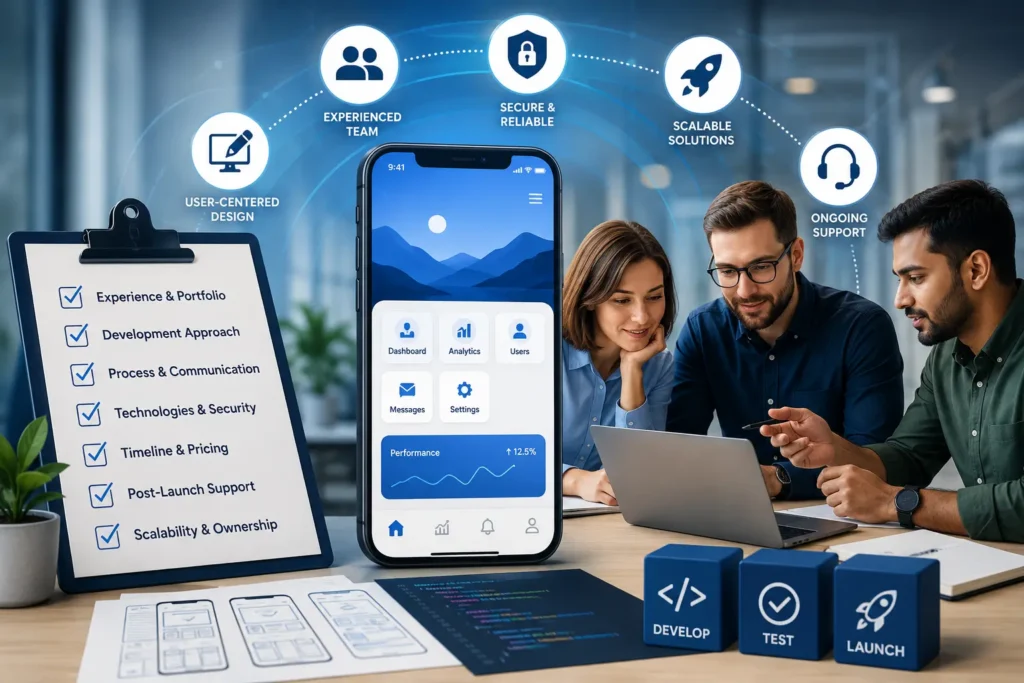
Mobile applications have become a crucial part of modern business operations. From enhancing customer engagement to streamlining internal processes, a well-designed app can create significant value for organizations of all sizes. However, the success of your mobile application largely depends on the development partner you choose.
Before beginning your search for a development company, it is worth understanding the key indicators your business may need a custom mobile app, as recognizing these signs can help you determine whether investing in a tailored mobile solution aligns with your long-term business goals. Once you’ve established that a custom app is the right choice, selecting the right development partner becomes the next critical step.
With countless agencies and freelancers offering app development services, selecting the right company can feel overwhelming. A wrong decision may lead to delays, budget overruns, security issues, and an app that fails to meet business objectives. That is why conducting proper due diligence before hiring a mobile app development company is critical.
Asking the right questions during the evaluation process can help you identify a reliable partner that understands your goals and has the expertise to deliver a successful project. Below are some of the most important questions every business should consider before making a hiring decision.
The Importance of Selecting the Right Development Partner
Developing a mobile application requires more than technical coding skills. It involves strategy, design, user experience, security, testing, and ongoing maintenance. The company you choose should be capable of supporting your project throughout its entire lifecycle.
A dependable mobile app development partner can help you:
- Transform your idea into a functional product
- Improve user engagement and retention
- Deliver projects within agreed timelines
- Build scalable and future-ready applications
- Protect sensitive user and business data
- Provide long-term technical support
Making an informed decision at the start can save significant time, money, and resources later.
What Kind of Experience Does Your Team Have?
One of the first areas to investigate is the company’s industry and technical experience.
A development agency with a proven track record is more likely to understand common challenges and provide effective solutions. Experienced teams often have established workflows, skilled specialists, and practical knowledge gained from previous projects.
When evaluating experience, ask about:
- The number of years they have been in business
- Types of apps they have developed
- Industries they have worked with
- Team expertise and certifications
- Notable client projects
Understanding their background will help determine whether they are equipped to handle your specific requirements.
Can You Show Examples of Previous Work?
Reviewing past projects provides valuable insight into a company’s capabilities.
Ask potential development partners to share portfolios, case studies, or live applications they have built. Examine the overall quality of their work, paying close attention to:
- Visual design
- Ease of navigation
- Feature functionality
- Loading speed
- User experience
Case studies can also reveal how the company solved business challenges and achieved measurable outcomes for clients.
Which Development Approach Do You Recommend?
Different applications require different development strategies.
Ask the company whether they specialize in native, hybrid, or cross-platform development and why they recommend a specific approach for your project. Before making a decision, it’s also worthwhile to understand the factors involved in choosing between native and hybrid mobile app solution for your business, as the right development approach can significantly impact your app’s performance, scalability, user experience, and long-term maintenance.
Native Development
Native applications are created specifically for individual operating systems such as Android or iOS.
Advantages include:
- Excellent performance
- Better device integration
- Enhanced user experience
- Greater reliability
Cross-Platform Development
Cross-platform frameworks allow developers to build a single application that works across multiple platforms.
Benefits may include:
- Faster project completion
- Reduced development costs
- Easier maintenance
- Consistent functionality
The best development company should explain the pros and cons of each option rather than pushing a one-size-fits-all solution.
How Do You Manage the App Development Process?
A structured development process is a sign of professionalism and organization.
Ask the company to explain how they handle projects from concept to launch.
A typical process often includes:
Discovery Phase
- Understanding business goals
- Defining target audiences
- Identifying project requirements
- Conducting competitor analysis
Design Stage
- User journey planning
- Wireframing
- Interactive prototyping
- User interface design
Development Phase
- Front-end coding
- Back-end development
- API integrations
Quality Assurance
- Functionality testing
- Device compatibility checks
- Performance evaluation
- Security assessments
Launch and Maintenance
- App store submission
- Monitoring
- Ongoing updates
A clear development roadmap helps ensure accountability and project transparency.
Who Will Be Involved in the Project?
Understanding the structure of the development team is essential.
Ask who will be directly responsible for your project and what their roles will be. A successful mobile application typically requires collaboration among various specialists, including:
- Project managers
- Business analysts
- UX/UI designers
- Mobile developers
- Backend engineers
- Quality assurance professionals
Knowing the team composition can help set expectations regarding communication and project management.
What Communication Practices Do You Follow?
Strong communication is often the foundation of successful projects.
Before hiring a development company, clarify how they communicate with clients throughout the project.
Important questions include:
- How frequently are updates provided?
- What communication tools are used?
- Will there be a dedicated project manager?
- How quickly do they respond to inquiries?
- How are changes and feedback managed?
Regular communication helps ensure everyone remains aligned on project goals and expectations.
What Technologies and Tools Do You Use?
Technology choices directly influence application performance, security, and scalability.
Ask about the development tools, programming languages, frameworks, and cloud platforms they use.
Topics to discuss include:
- Mobile frameworks
- Database solutions
- Cloud hosting environments
- API integration capabilities
- Security technologies
An experienced company should be able to explain why specific technologies are suitable for your project.
How Do You Address Security Concerns?
Mobile application security should never be treated as an afterthought.
Data breaches and cyber threats can severely impact both businesses and users. Therefore, it is important to understand the company’s security practices.
Ask about:
- Data encryption methods
- Authentication procedures
- Secure coding standards
- Security audits
- Compliance requirements
A reputable development partner will integrate security measures throughout the development lifecycle.
What Timeline Can We Expect?
Project timelines vary depending on app complexity, features, and integrations.
Ask for realistic estimates covering each phase of development, including:
- Planning
- Design
- Development
- Testing
- Deployment
Be cautious of providers promising extremely short turnaround times without fully understanding your requirements. Reliable agencies typically provide detailed schedules based on project scope.
How Is Your Pricing Model Structured?
Budget transparency is an important consideration when hiring a mobile app development company.
Request a clear explanation of pricing and what is included in the quoted cost.
Common pricing models include:
Fixed-Cost Projects
Suitable when requirements are clearly defined before development begins.
Hourly Billing
Provides flexibility for evolving projects and changing requirements.
Dedicated Development Teams
Ideal for businesses seeking long-term technical partnerships.
Make sure to ask about any additional expenses such as third-party integrations, licensing fees, hosting, or maintenance costs.
Do You Offer Support After Launch?
Many businesses focus entirely on development and overlook post-launch requirements.
Mobile applications require continuous maintenance to remain secure, stable, and compatible with new operating system updates.
Ask about:
- Maintenance packages
- Bug-fix policies
- Performance monitoring
- Technical support availability
- Future feature enhancements
Long-term support can help maximize the lifespan and effectiveness of your application.
What Testing Procedures Do You Follow?
Thorough testing is essential for delivering a high-quality user experience.
Ask how the company verifies app performance before launch.
A comprehensive testing strategy may include:
- Functional testing
- Usability testing
- Performance testing
- Security testing
- Device compatibility testing
Investing in quality assurance helps minimize post-launch issues and improves customer satisfaction.
Who Owns the Intellectual Property?
Ownership rights should always be clarified before signing a contract.
Discuss who will own:
- Source code
- Application designs
- Databases
- Documentation
- Intellectual property
Ideally, your organization should retain full ownership of all project assets once contractual obligations have been fulfilled.
Can the App Be Expanded in the Future?
Business needs often evolve over time. An app that works today may require additional features tomorrow.
Ask how the company plans for future growth and scalability.
Important considerations include:
- Increased user traffic
- New functionality
- Third-party integrations
- Expansion into new markets
A scalable architecture can help prevent costly redevelopment as your business grows.
May We Speak with Current or Past Clients?
Client references can provide an unbiased perspective on a company’s performance.
When speaking with previous clients, ask about:
- Overall satisfaction
- Communication quality
- Project delivery timelines
- Budget management
- Ongoing support
Feedback from real clients can help validate the company’s claims and provide additional confidence in your decision.
Warning Signs to Be Aware Of
Not every mobile app development company will be the right fit for your project.
Potential red flags include:
- Lack of verified client reviews
- Poor communication during initial discussions
- Unrealistically low project estimates
- Limited technical expertise
- No defined testing process
- Absence of maintenance services
- Unclear contracts or deliverables
Identifying these issues early can help avoid costly mistakes. If you’re researching mobile app development mistakes businesses should avoid, paying attention to these warning signs can help you select a reliable development partner and reduce the risk of project delays, budget overruns, or technical setbacks.
Conclusion
Choosing a mobile app development company is a significant investment that deserves careful consideration. Rather than focusing solely on price, businesses should evaluate experience, technical expertise, communication practices, security standards, scalability, and post-launch support. By asking thoughtful questions and thoroughly assessing potential partners, you can significantly increase the likelihood of launching a successful mobile application that aligns with your business objectives and delivers long-term value. Taking the time to research and invest in choosing the right mobile app development company can help you avoid costly mistakes and build a reliable, long-term technology partnership.
By asking thoughtful questions and thoroughly assessing potential partners, you can significantly increase the likelihood of launching a successful mobile application that aligns with your business objectives and delivers long-term value.
Build Your Next Mobile App with Confidence
Whether you’re creating a customer-focused mobile solution, launching a startup product, or developing a custom enterprise application, partnering with the right team can make all the difference. Horizon Services, a full-service digital agency based in Watford, UK, provides comprehensive mobile app development, web development, UI/UX design, digital marketing, and technology consulting services tailored to modern business needs.
Hire mobile app developers from Horizon Services and turn your vision into innovative, scalable, and high-performing mobile applications.


