
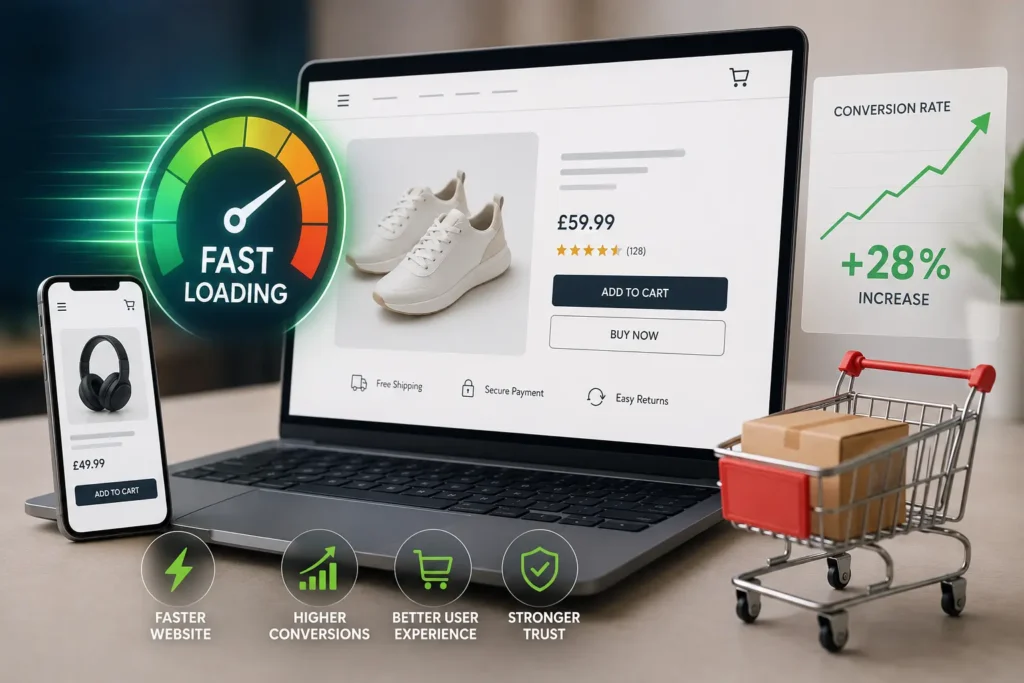
In today’s digital-first marketplace, website performance plays a decisive role in shaping online sales success. For ecommerce businesses, speed is not just a technical performance factor—it is a direct revenue driver. A slow-loading website can silently reduce conversions, damage user trust, and push potential buyers toward competitors.
Modern customers expect instant results. If an ecommerce store does not load quickly, users rarely wait—they simply leave. This makes website speed one of the most critical elements in building a high-performing online store. In fact, website performance is among the essential features that make an ecommerce website successful, as it directly influences user experience, customer trust, and purchasing decisions.
In this article, we will explore how website speed affects ecommerce conversions, why it matters for business growth, and what steps can be taken to improve it for better results.
The Importance of Website Speed in Ecommerce Success
Website speed refers to how quickly a page loads and becomes usable for visitors. In ecommerce environments, this includes product pages, category listings, cart pages, and checkout flows.
Shoppers today have extremely high expectations. Even a slight delay in loading can impact their experience negatively. If a website feels slow or unresponsive, users are more likely to abandon it before making a purchase.
Some key behavioral patterns include:
- Users abandoning pages that take too long to load
- Reduced engagement on slow-loading product pages
- Lower trust in websites that feel sluggish
Essentially, the faster your website, the better the user experience—and better experience leads to higher sales.
Relationship Between Website Speed and Conversion Performance
Conversion rate measures how many visitors complete a desired action, such as buying a product. Website speed has a strong influence on this metric.
Faster Websites Drive Higher Sales
When an ecommerce website loads quickly, users can browse effortlessly, compare products easily, and complete purchases without frustration. This smooth experience encourages them to stay longer and buy more.
Faster performance directly supports:
- Increased product exploration
- Higher add-to-cart rates
- Improved checkout completion
Even a minor improvement in load time can lead to noticeable increases in revenue.
Slow Websites Cause User Drop-Off
On the other hand, a slow website creates friction in the buying journey. Visitors tend to lose patience quickly, especially when they are ready to make a purchase.
If pages take too long to load:
- Users leave before viewing products
- Cart abandonment increases
- Overall engagement drops significantly
In ecommerce, delays almost always translate into lost opportunities.
Psychological Impact of Website Speed on Buyers
Website performance influences how users perceive your brand. A fast website builds confidence, while a slow one creates doubt.
Speed Builds Trust
When a website loads instantly, users often associate it with:
- Professionalism
- Reliability
- Strong technical infrastructure
This positive perception makes customers more comfortable sharing payment details and completing purchases.
Slow Speed Creates Doubt
If a website feels outdated or slow, users may question:
- Is the website secure?
- Are the products reliable?
- Is the business trustworthy?
These doubts can prevent users from completing transactions.
Mobile Shopping and Performance Expectations
Mobile commerce has become a major part of online shopping behavior. Many users browse and purchase directly from smartphones, often using mobile data connections.
This makes speed even more critical.
Mobile users typically expect:
- Fast-loading pages on weaker networks
- Smooth scrolling and navigation
- Quick checkout processes
If your ecommerce website is not optimized for mobile speed, you risk losing a large portion of potential customers.
Slow mobile experiences often result in higher bounce rates compared to desktop users.
Why Core Performance Metrics Matter
Search engines and browsers evaluate websites based on performance indicators known as Core Web Vitals. These metrics focus on user experience aspects such as:
- Loading speed
- Interactivity
- Visual stability
While these metrics influence SEO rankings, they also directly affect conversion rates. A website that performs well on these parameters ensures smoother browsing and a more enjoyable shopping experience.
Better performance leads to:
- Faster page rendering
- Improved interaction response
- Reduced layout shifts during browsing
All of which contribute to higher customer satisfaction and conversions.
Hidden Revenue Loss from Slow Websites
Many ecommerce businesses do not realize how much revenue they lose due to poor website performance. The impact is often gradual but significant over time.
Reduced Sales Volume
Even a small percentage of users leaving due to slow speed can lead to substantial revenue loss over months.
Wasted Advertising Spend
If you invest in paid advertising, slow landing pages reduce ROI. Users may click on ads but leave before taking any action, resulting in wasted budget.
Lower Customer Loyalty
Returning customers expect better experiences. If your site feels slow or difficult to use, they may choose competitors for future purchases.
Common Reasons Ecommerce Websites Become Slow
There are several technical and structural issues that can affect website performance:
Heavy Image Files
Large, uncompressed product images significantly increase load times.
Weak Hosting Infrastructure
Poor hosting environments struggle to handle traffic efficiently, especially during peak times.
Excess Scripts and Plugins
Too many third-party tools and scripts slow down page rendering.
Poorly Optimized Code
Unclean or outdated code structures increase processing time.
Lack of Caching Mechanisms
Without caching, servers repeatedly load full content for every visitor.
Practical Ways to Improve Ecommerce Speed
Improving website performance requires a combination of technical optimization and strategic enhancements. Some effective methods include:
- Compressing images without losing quality
- Using content delivery networks (CDNs) for faster content delivery
- Minimizing CSS and JavaScript files
- Enabling browser caching for returning users
- Implementing lazy loading for images and videos
- Choosing reliable, high-performance hosting solutions
Even small improvements in these areas can significantly enhance user experience and increase conversions.
Why Website Speed Should Be a Business Priority
Speed optimization is not just a technical upgrade—it is a business growth strategy. Website performance improvements work best when combined with other ecommerce SEO techniques to boost revenue, helping businesses enhance user experience, improve search visibility, and maximize conversions. A faster ecommerce website provides multiple advantages:
- Better customer satisfaction
- Increased conversion rates
- Lower bounce rates
- Stronger brand credibility
- Improved SEO visibility
In a competitive ecommerce environment, every second matters. Faster websites consistently outperform slower competitors in both traffic retention and sales performance.
Partner with Experts for Better Ecommerce Performance
Optimizing website speed requires specialized knowledge in development, UX design, server configuration, and performance engineering. Many businesses struggle to achieve optimal results without expert help.
If you want to enhance your ecommerce store’s performance and increase conversion rates, working with professionals can make a significant difference.
Horizon Services is a Watford-based digital agency that specializes in building high-performance websites and ecommerce platforms designed for speed, scalability, and conversion optimization. Their team focuses on delivering fast, user-friendly, and SEO-optimized digital solutions that help businesses grow online.
For businesses looking to upgrade their online store, explore tailored ecommerce website solutions designed to improve speed, enhance user experience, and boost sales performance.
Conclusion
Website speed is one of the most influential factors in ecommerce success. It affects everything from user experience and trust to engagement and final purchase decisions. A fast website keeps customers engaged and encourages them to complete transactions, while a slow website leads to lost traffic and reduced revenue.
In an environment where competition is just a click away, optimizing speed is no longer optional—it is essential for survival and growth.
Investing in performance improvements today can lead to significantly higher conversions, better customer retention, and stronger long-term business success.


