
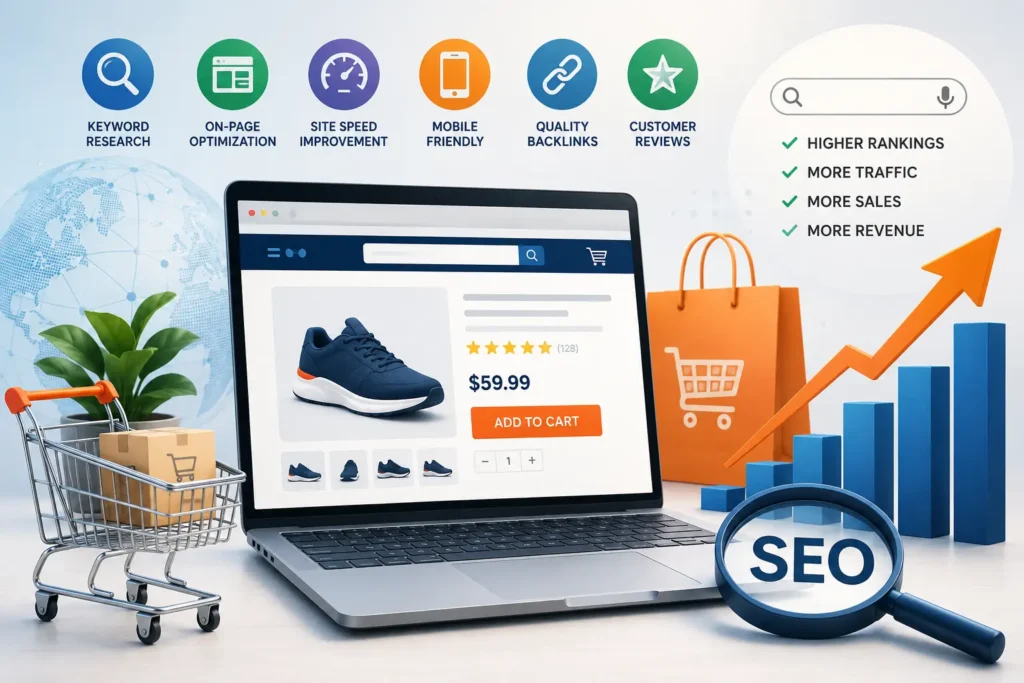
The ecommerce industry continues to expand rapidly, making online competition tougher than ever before. Simply having an online store is no longer enough to attract customers and drive sales. Businesses must ensure their products are visible where shoppers begin their buying journey — search engines.
Ecommerce SEO plays a critical role in helping online stores rank higher in search results, attract targeted visitors, and convert traffic into revenue. A well-optimized ecommerce website can generate consistent organic sales without relying entirely on paid advertising campaigns. Understanding the essential features that make an ecommerce website successful is equally important, as strong functionality combined with effective SEO creates a seamless shopping experience that supports higher rankings and better conversions.
By implementing the right SEO methods, ecommerce brands can improve visibility, enhance customer experience, and build long-term online growth. This article explores some of the most effective ecommerce SEO strategies businesses can use to increase organic sales and strengthen their digital presence.
The Importance of SEO for Ecommerce Websites
Modern consumers heavily depend on search engines when researching products, comparing brands, and making purchasing decisions. If your online store fails to appear in search results, potential customers may end up buying from competitors instead.
An effective ecommerce SEO strategy helps businesses:
- Increase targeted website visitors
- Improve online visibility
- Generate qualified leads
- Strengthen brand credibility
- Lower customer acquisition costs
- Improve user engagement
- Drive long-term sales growth
Organic search traffic is especially valuable because it attracts users actively searching for products or solutions related to your business.
Conduct Strategic Keyword Research
Keyword research is one of the most important aspects of ecommerce SEO. It helps identify the exact search phrases potential customers use when looking for products online.
Businesses should focus on different keyword categories, including:
- Product-related search terms
- Long-tail keywords
- Purchase-intent keywords
- Category-specific phrases
- Problem-solving queries
Rather than targeting highly competitive broad terms, ecommerce stores can benefit from more specific searches.
For example:
Instead of:
- “smartphones”
Use:
- “best smartphones under budget”
- “gaming smartphones with long battery life”
- “latest 5G smartphones online”
Specific keywords often bring visitors with stronger buying intent, leading to higher conversion rates.
Integrate relevant keywords naturally across:
- Product descriptions
- Category pages
- Blog articles
- Meta titles
- Image alt text
- URLs
A strong keyword strategy ensures search engines understand your website content clearly.
Improve Product Page Optimization
Product pages are the backbone of every ecommerce website. Optimizing them properly can significantly increase both search rankings and sales performance.
Create Original Product Descriptions
Using duplicate manufacturer content can limit search visibility. Instead, businesses should develop unique descriptions that explain:
- Product advantages
- Features and specifications
- Real-world benefits
- Use cases
- Customer pain points
Well-written product content helps search engines index pages effectively while persuading customers to make purchases.
Optimize Product Headlines
Product titles should be informative, concise, and keyword-focused. Include relevant details such as:
- Product type
- Brand
- Material
- Color
- Key attributes
A clear product title improves user experience and increases click-through rates from search results.
Enhance Product Images
Images strongly influence ecommerce buying decisions. Optimized visuals improve both SEO and customer engagement.
Best practices include:
- Compressing image files
- Adding descriptive filenames
- Writing image alt text
- Including multiple product views
- Offering zoom functionality
High-quality visuals help create a better shopping experience while supporting image search rankings.
Increase Website Loading Speed
Page speed directly affects user experience and search engine rankings. Slow ecommerce websites often experience higher bounce rates and lower conversion performance.
To improve website speed:
- Compress large media files
- Reduce unnecessary scripts
- Enable browser caching
- Use fast hosting solutions
- Implement lazy loading
- Utilize a content delivery network (CDN)
Faster websites provide smoother browsing experiences and encourage users to stay longer and complete purchases. Understanding the influences of website speed on ecommerce conversion rate can help businesses recognize how even small improvements in page load times can significantly impact customer satisfaction, reduce cart abandonment, and drive higher sales.
Optimize Ecommerce Stores for Mobile Users
Mobile shopping continues to dominate ecommerce traffic worldwide. Search engines also prioritize mobile-friendly websites through mobile-first indexing.
To improve mobile optimization:
- Use responsive website design
- Simplify navigation menus
- Improve mobile page speed
- Use readable typography
- Optimize checkout experiences
- Create mobile-friendly buttons
A seamless mobile experience can significantly increase both rankings and conversions.
Build SEO-Friendly URL Structures
Well-structured URLs help search engines understand website content more effectively.
A strong ecommerce URL should:
- Be short and descriptive
- Include relevant keywords
- Avoid random numbers or symbols
- Use hyphens between words
- Reflect page hierarchy
Example of an optimized URL:
example.com/women-running-shoes
Simple URL structures improve usability and make pages easier to crawl and index.
Strengthen Category Page SEO
Category pages often target broader search queries with high traffic potential. Proper optimization can help these pages rank competitively.
Category page optimization techniques include:
- Writing unique category descriptions
- Using targeted keywords naturally
- Improving internal linking
- Adding FAQs
- Optimizing metadata
- Simplifying product navigation
Strong category pages guide users toward relevant products while improving search visibility.
Use Structured Data Markup
Structured data helps search engines better interpret ecommerce content. It can also improve how listings appear in search results.
Schema markup can display information such as:
- Product ratings
- Prices
- Availability
- Reviews
- FAQs
- Breadcrumbs
Enhanced search listings can improve click-through rates and increase organic traffic opportunities.
Develop an Effective Internal Linking Strategy
Internal linking helps search engines crawl ecommerce websites efficiently while guiding visitors to important pages.
Useful internal linking methods include:
- Linking related products
- Connecting blog posts to product pages
- Using breadcrumb navigation
- Highlighting popular categories
- Featuring best-selling products
A strong internal linking structure improves website authority distribution and enhances navigation.
Publish Valuable Content Regularly
Content marketing remains a highly effective ecommerce SEO strategy. Informative content helps attract potential buyers during the research phase of the customer journey.
Ecommerce brands can create:
- Buying guides
- Tutorials
- Product comparisons
- Trend reports
- Industry insights
- Frequently asked questions
- Educational blogs
For example, a beauty brand might publish content like:
- “How to Choose the Right Skincare Routine”
- “Top Makeup Trends This Year”
- “Beginner’s Guide to Organic Beauty Products”
Helpful content builds trust and increases organic traffic over time.
Improve Overall User Experience
Search engines prioritize websites that deliver excellent user experiences. A well-designed ecommerce store encourages visitors to stay longer and complete purchases.
Important UX elements include:
- Easy navigation
- Clear product categories
- Fast page loading
- Simple checkout process
- Secure payment systems
- Trust badges
- Accessible website design
Improving user experience can positively impact both rankings and sales performance.
Encourage Customer Reviews
Customer reviews are valuable for ecommerce SEO because they provide fresh, user-generated content and improve credibility.
Benefits of reviews include:
- Increased customer trust
- Better search relevance
- Higher engagement
- Improved conversion rates
- Rich snippet opportunities
Encouraging customers to leave authentic feedback can strengthen your online reputation and visibility.
Prevent Duplicate Content Problems
Duplicate content is a common issue for ecommerce stores due to product filters, variations, and multiple URLs.
To minimize duplicate content risks:
- Use canonical tags
- Avoid copying product descriptions
- Manage URL parameters carefully
- Consolidate similar pages
- Optimize pagination
Addressing duplicate content issues helps preserve SEO performance and improves indexing accuracy.
Focus on Technical Ecommerce SEO
Technical SEO ensures search engines can access and understand your website properly.
Important technical SEO practices include:
XML Sitemap Optimization
Submit updated sitemaps to search engines to improve indexing.
Secure HTTPS Implementation
SSL certificates help protect user data and improve website trustworthiness.
Fix Crawl Errors
Resolve broken links, redirects, and server issues that may affect rankings.
Optimize Website Architecture
Create a clear site structure that helps both users and search engines navigate efficiently.
A technically optimized website creates a strong foundation for long-term SEO success.
Target Different Types of Search Intent
Successful ecommerce SEO strategies address multiple stages of the customer journey.
Informational Searches
These users are researching products or seeking advice.
Examples:
- “best office chairs for back support”
- “how to choose hiking backpacks”
Transactional Searches
These users are ready to make a purchase.
Examples:
- “buy ergonomic office chair online”
- “discount hiking backpacks”
Targeting both search intents helps ecommerce businesses capture traffic throughout the buying process.
Build High-Quality Backlinks
Backlinks remain one of the strongest ranking factors in SEO. High-quality links from authoritative websites improve domain authority and search visibility.
Effective link-building strategies include:
- Guest blogging
- Influencer collaborations
- Digital PR campaigns
- Industry partnerships
- Creating shareable resources
- Publishing original research
Focus on quality over quantity when acquiring backlinks.
Prepare for Voice Search Growth
Voice search usage continues to rise due to smart devices and mobile assistants.
Voice searches are typically:
- Conversational
- Longer in length
- Question-based
To optimize for voice search:
- Use natural language
- Create FAQ sections
- Target long-tail keywords
- Improve local SEO
- Answer common customer questions clearly
Voice optimization can help ecommerce brands stay ahead of changing search behaviors.
Track and Improve SEO Performance
SEO requires ongoing analysis and improvements. Businesses should regularly monitor key metrics to evaluate performance.
Important SEO metrics include:
- Organic traffic growth
- Conversion rates
- Keyword rankings
- Bounce rates
- Revenue from organic channels
- User engagement
- Page speed performance
Data-driven insights help businesses refine strategies and maximize ROI.
Utilize Local SEO Opportunities
Even ecommerce brands can benefit from local SEO, especially businesses serving specific regions or operating physical locations.
Local SEO strategies include:
- Optimizing Google Business Profiles
- Creating local landing pages
- Targeting geo-specific keywords
- Building local citations
- Generating customer reviews
Local optimization can help businesses attract nearby customers and improve regional visibility.
Conclusion
Ecommerce SEO is one of the most effective long-term strategies for increasing online sales and building sustainable digital growth. As competition continues to increase, businesses must optimize every aspect of their online stores to improve visibility and attract high-intent shoppers.
From technical SEO and keyword targeting to content marketing and user experience improvements, every optimization effort contributes to stronger organic performance. Businesses that consistently invest in ecommerce SEO can achieve higher rankings, better customer engagement, and increased revenue over time.For companies looking to build scalable, SEO-driven online stores, partnering with experienced professionals can deliver significant advantages. Horizon Services provides advanced ecommerce web solutions and customized SEO solutions tailored to help businesses create powerful ecommerce platforms that drive traffic, improve conversions, and support long-term online success.


