
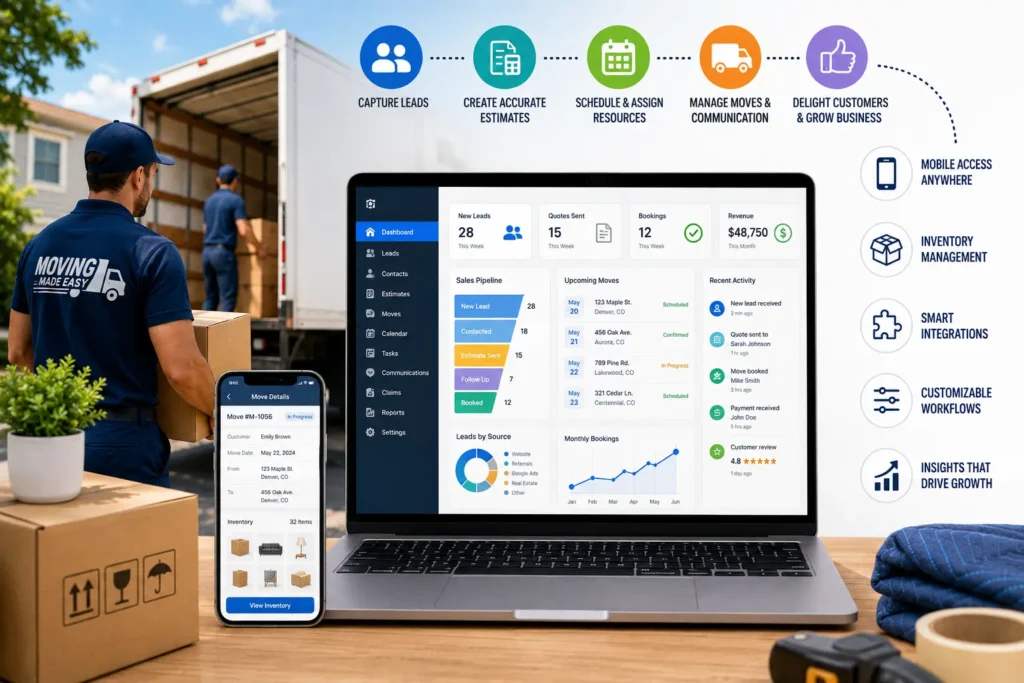
The moving and packing industry has always been about trust, timing, and coordination. When customers hand over their precious belongings to a moving company, they’re not just paying for transportation—they’re buying peace of mind. Yet behind the scenes, many moving companies still rely on spreadsheets, paper logs, and scattered communication tools to manage their operations. This is where Customer Relationship Management (CRM) software is making a game-changing difference.
The Unique Challenges of Moving Companies
Moving companies face operational complexities that many other service businesses don’t encounter. A single move involves multiple touchpoints: initial inquiry, in-home or virtual estimates, scheduling, packing services, transportation logistics, storage coordination, and post-move follow-up. Each stage requires seamless communication between sales teams, operations staff, drivers, and customers.
Without a centralized system, information gets lost. A sales rep might promise a delivery date that operations can’t fulfill. Important details about fragile items get buried in email threads. Follow-up calls to happy customers never happen, meaning valuable referral opportunities vanish. These inefficiencies don’t just hurt productivity—they damage customer relationships and erode profitability.
Why CRM is Essential for Modern Movers
A CRM designed for moving companies acts as the central nervous system of your business. It connects every department, automates repetitive tasks, and ensures no customer falls through the cracks. Here’s how the right CRM transforms moving company operations:
Streamlined Lead Management
Moving leads come from various sources—your website, referrals, real estate partnerships, and lead generation platforms. A CRM captures all these inquiries automatically, assigns them to sales representatives, and tracks every interaction. Instead of sticky notes and memory-based follow-ups, your team gets automated reminders and email templates designed specifically for moving sales.
Accurate Estimation and Quoting
Estimating moving costs accurately is both an art and a science. Modern CRMs integrate with estimation tools or include built-in calculators that factor in inventory volume, distance, special handling requirements, and seasonal pricing. Sales teams can generate professional quotes instantly during customer calls or in-home visits, reducing the back-and-forth that delays bookings.
Calendar and Resource Coordination
Coordinating trucks, crews, and equipment across multiple moves requires real-time visibility. CRM systems with integrated scheduling tools show availability at a glance, prevent double-booking disasters, and optimize route planning. When a customer calls to reschedule, your team can immediately see alternative slots without playing phone tag with dispatch.
Customer Communication Automation
Moving is stressful for customers. They want updates about their shipment, confirmation of arrival times, and clear answers to their questions. A CRM automates these touchpoints—sending booking confirmations, pre-move checklists, day-of notifications, and post-move satisfaction surveys. This proactive communication builds trust and reduces the flood of “where’s my stuff?” calls to your office.
Claims and Issue Management
Even the best moving companies occasionally deal with damaged items or service complaints. A CRM tracks these issues from first report through resolution, ensuring accountability and helping you identify patterns. When you handle problems promptly and professionally, negative experiences can actually strengthen customer loyalty.
Key Features to Look For
Not all CRMs are created equal for moving companies. When evaluating options, prioritize these capabilities:
- Mobile accessibility – Your sales team and drivers are always on the road. The CRM must work seamlessly on smartphones and tablets, allowing estimates to be created and updated from anywhere.
- Inventory management – Look for tools that let you document customer belongings with photos, condition notes, and special handling instructions. This protects both you and your customers.
- Integration capabilities – Your CRM should connect with your accounting software, GPS tracking systems, and marketing platforms to eliminate data entry duplication.
- Customizable workflows – Every moving company operates differently. The ability to customize sales pipelines, checklists, and automated sequences ensures the software adapts to your process—not the other way around.
- Reporting and analytics – Understand which marketing channels deliver the best leads, track your sales team’s conversion rates, and identify your most profitable routes and services.
Implementation Best Practices
Introducing a CRM requires more than just software installation. Start by mapping your current customer journey and identifying friction points. Involve team members from sales, operations, and dispatch in the selection process—their buy-in determines adoption success.
Invest time in data migration and cleanup. Importing messy data from old spreadsheets just perpetuates past problems. Set up automated workflows gradually rather than overwhelming your team with too many changes at once.
Most importantly, use the CRM as a tool for coaching and improvement, not surveillance. Share dashboards showing team performance, celebrate wins, and continuously refine your processes based on the insights the system provides.
The Bottom Line
The moving industry is becoming increasingly competitive. Customers expect the convenience of online booking, instant communication, and transparent tracking—experiences they get from Amazon and Uber, not just traditional service providers. A CRM helps you meet these expectations while running a more efficient, profitable operation.
Moving companies that embrace CRM technology report significant improvements: higher booking rates, better customer reviews, reduced administrative overhead, and increased referral business. In an industry built on reputation and relationships, having the right technology to manage both isn’t just helpful—it’s essential for growth.
Is your moving company ready to leave spreadsheets behind and step into organized, scalable operations? The investment in a purpose-built CRM pays dividends in satisfied customers, streamlined teams, and a healthier bottom line.


