
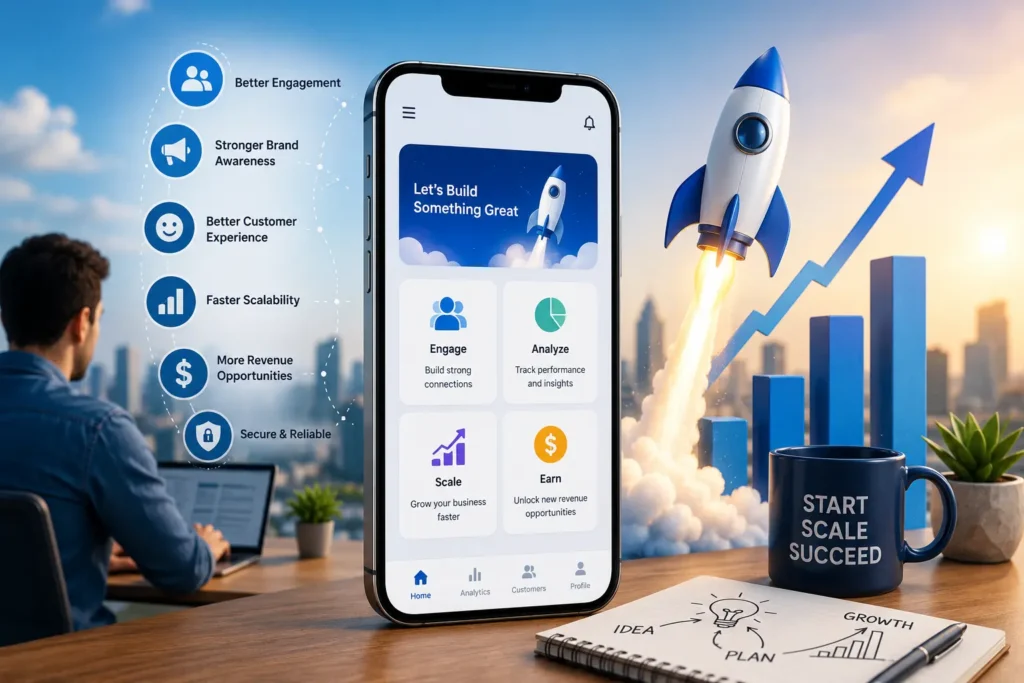
In the modern digital landscape, startups need more than innovative products or services to succeed. They must deliver convenience, speed, personalized experiences, and seamless accessibility to customers. One of the most effective ways to achieve these goals is through mobile app development. As mobile device usage continues to grow worldwide, businesses that invest in mobile applications gain a major competitive advantage over companies that rely only on traditional websites or offline interactions.
For startups, mobile applications create opportunities to scale operations quickly while building stronger relationships with customers. From increasing engagement and improving user experiences to automating business processes and generating new revenue streams, mobile apps provide startups with the tools needed for sustainable expansion.
This article explains how mobile app development helps startups scale faster and why investing in a mobile application has become essential for modern businesses.
Why Mobile Apps Matter for Startups
Consumers today rely heavily on smartphones for daily activities. Whether it’s online shopping, food delivery, banking, booking appointments, or accessing entertainment, mobile apps have become an important part of everyday life. Startups that offer smooth and convenient mobile experiences can connect with customers more effectively and improve customer satisfaction.
Unlike established corporations, startups often operate in rapidly changing and highly competitive industries. To stay relevant, they need flexible solutions that allow them to adapt quickly to customer demands and market trends. Mobile applications provide this flexibility while helping businesses build direct communication channels with users.
A mobile app is much more than a digital platform. It acts as a powerful business tool that allows startups to interact with customers instantly, deliver personalized services, gather user insights, and improve overall operational efficiency. To maximize user engagement and long-term success, startups should also focus on implementing the top features every startup mobile app should include, such as personalized experiences, secure payment systems, and seamless navigation.
Boosting Customer Engagement
Customer engagement plays a major role in the long-term success of startups. Businesses that keep users actively involved are more likely to improve retention rates, increase conversions, and create loyal customers.
Mobile apps help startups strengthen engagement through various features such as:
- Push notifications
- Personalized recommendations
- Loyalty rewards
- In-app messaging
- Exclusive promotions
- Instant updates
Unlike websites that users may forget after leaving, mobile apps remain visible on users’ smartphones. This constant visibility helps businesses stay connected with customers and improve brand recall.
For instance, an online retail startup can send notifications about flash sales, abandoned shopping carts, or new arrivals. Similarly, a fitness application can provide workout reminders and health tips tailored to individual users.
Consistent engagement encourages users to interact with the brand regularly, increasing the chances of long-term customer retention.
Increasing Brand Awareness
Strong branding is essential for startup growth. Mobile applications help businesses build a recognizable and trustworthy brand identity.
Whenever users unlock their smartphones, the app icon reminds them about the business. Frequent interaction with the app helps strengthen familiarity and trust over time.
Startups can also create unique and memorable app experiences using:
- Customized interfaces
- Consistent brand colors
- Personalized user journeys
- Interactive design elements
- Smooth and intuitive navigation
A professionally developed app reflects credibility and professionalism, helping startups appear more reliable and established in the eyes of customers.
When users enjoy using an app, they begin associating the brand with convenience, innovation, and quality service.
Delivering Better Customer Experiences
Customer experience has become one of the most important factors influencing business growth. Modern consumers expect digital experiences that are fast, simple, and highly convenient.
Mobile apps allow startups to provide more seamless experiences compared to standard websites.
Faster Performance
Applications generally load faster than websites because they store certain information directly on users’ devices. Faster loading speeds improve usability and reduce the likelihood of users leaving the platform.
Personalized User Experiences
Mobile apps can track user behavior, preferences, and browsing history to provide customized recommendations and personalized content.
Simple Navigation
Well-structured mobile apps make it easier for users to browse products, access services, or find information without confusion.
Offline Functionality
Certain features within mobile apps can continue working even when internet access is limited, improving convenience for users.
Secure Payment Systems
Mobile applications can integrate secure payment gateways and authentication methods that improve trust and ensure safe transactions.
By creating smooth and personalized experiences, startups can increase customer satisfaction and encourage repeat usage.
Supporting Faster Scalability
One of the biggest goals for startups is scalability. As businesses grow, they need systems capable of handling increased traffic, transactions, and customer interactions.
Mobile apps make scaling easier by automating operations, simplifying communication, and improving workflow efficiency.
Startups can use mobile applications to:
- Automate customer service using chatbots
- Manage appointments and bookings
- Accept digital payments instantly
- Monitor inventory in real time
- Improve team communication
- Gather and organize customer data
Automation reduces the need for manual work, allowing startups to focus more on innovation and strategic growth.
Cloud-based mobile applications also give startups the flexibility to scale infrastructure as customer demand increases. This adaptability is especially valuable for fast-growing businesses.
Accessing Valuable Business Insights
Data plays a major role in helping startups make informed business decisions. Mobile applications provide access to important customer insights that businesses can use to improve products and services.
Analytics tools integrated into mobile apps help startups track:
- Customer engagement levels
- Purchasing behavior
- Session duration
- Frequently used features
- User demographics
- Retention rates
- Conversion performance
These insights help businesses understand customer needs and identify areas requiring improvement.
For example, if users abandon purchases during checkout, startups can simplify the payment process to improve conversions.
Data-driven strategies allow startups to optimize user experiences and scale operations more efficiently.
Generating New Revenue Opportunities
Mobile apps also create multiple monetization possibilities for startups.
Businesses can generate income through:
- Subscription services
- In-app purchases
- Premium memberships
- Advertising
- Affiliate partnerships
- Commission-based services
For instance, an educational startup can offer free learning resources while charging for premium courses or certifications.
Similarly, service-based businesses can use apps to streamline payments, increase upselling opportunities, and improve booking experiences.
A successful mobile app not only improves customer engagement but also becomes an important revenue channel for the business.
Improving Customer Retention
Retaining existing customers is often more cost-effective than acquiring new ones. Mobile applications help startups improve customer loyalty through personalized communication and rewarding experiences.
Features such as referral systems, loyalty rewards, and exclusive discounts encourage customers to return regularly.
Examples include:
- Retail businesses offering reward points
- Food delivery apps providing repeat-order discounts
- Fitness apps rewarding users for achieving milestones
These loyalty-building strategies increase customer lifetime value and strengthen long-term relationships.
Satisfied customers are also more likely to leave positive reviews and recommend the app to friends and family, helping startups grow organically.
Gaining a Competitive Edge
Startups frequently compete against larger organizations with bigger marketing budgets and established reputations. Mobile applications help level the playing field by allowing startups to provide innovative and customer-friendly experiences.
Businesses that adopt mobile technology early can differentiate themselves from competitors and attract digitally focused consumers.
A feature-rich app demonstrates that the startup values convenience, innovation, and customer satisfaction.
Additionally, startups can quickly introduce updates and new features within their apps, allowing them to adapt to changing market trends faster than traditional businesses.
This flexibility provides startups with a strong competitive advantage.
Strengthening Digital Marketing Strategies
Mobile applications play a major role in improving digital marketing performance.
Apps integrate effectively with marketing channels such as:
- Social media campaigns
- Email marketing
- Influencer collaborations
- SMS promotions
- Content marketing
- Referral programs
Push notifications are especially effective because they allow businesses to communicate directly with users without depending on social media algorithms or email open rates.
Startups can use notifications to share personalized promotions, reminders, and important updates.
Additionally, mobile apps help businesses target audiences more effectively by segmenting users based on interests, behaviors, and preferences.
Increasing Operational Efficiency
Many startups operate with small teams and limited resources. Mobile apps help businesses optimize operations and improve productivity.
Internal mobile applications can assist with:
- Employee collaboration
- Project management
- Inventory monitoring
- Customer relationship management
- Appointment scheduling
- Remote team coordination
Automation reduces repetitive tasks and improves workflow efficiency, allowing teams to focus on customer service, innovation, and business development.
This operational efficiency helps startups grow without significantly increasing overhead costs.
Reaching Larger Markets
One of the greatest benefits of mobile apps is their ability to connect businesses with customers worldwide.
A mobile app allows startups to expand beyond local markets and reach audiences in multiple cities and countries.
Features such as multilingual support, global payment gateways, and location-based services make international expansion easier.
Mobile apps also enable businesses to serve customers around the clock without requiring physical storefronts.
This broader market reach creates additional growth opportunities and improves overall brand visibility.
Adapting to Mobile-First Consumer Trends
Consumer behavior continues shifting toward mobile-first experiences. Businesses that fail to adapt risk losing relevance and customers.
Modern users expect:
- Instant access to services
- Fast-loading platforms
- Mobile-friendly experiences
- Personalized recommendations
- Secure digital payments
- Real-time support
Mobile apps help startups meet these expectations while staying ahead of changing industry trends.
As technologies such as artificial intelligence, machine learning, and augmented reality continue evolving, mobile apps will become even more important for businesses.
Startups that embrace mobile technology today position themselves for future success.
Selecting the Right Mobile App Development Partner
Creating a successful mobile app requires more than technical coding skills. Startups need a development partner that understands business goals, user experience, scalability, and long-term performance.
An experienced app development agency can help businesses:
- Identify essential app features
- Build scalable systems
- Design intuitive user interfaces
- Ensure data security
- Optimize app performance
- Provide maintenance and updates
Partnering with skilled professionals helps startups avoid costly mistakes and launch applications that support long-term business growth.
Final Thoughts
Mobile app development has become a powerful growth driver for startups. From enhancing customer engagement and improving user experiences to increasing operational efficiency and generating new revenue opportunities, mobile applications help businesses scale faster and compete more effectively.
A well-designed app allows startups to build stronger relationships with customers, collect valuable insights, and deliver personalized experiences that encourage loyalty.
As mobile usage continues to dominate the digital landscape, startups that invest in mobile applications will be better prepared for long-term growth and market success.
If your startup wants to develop a scalable and high-performing mobile application, partnering with the right development agency is essential.
Searching for a reliable mobile app development company in Watford, UK? Horizon Services offers complete digital solutions tailored for startups and growing businesses. From strategy and UI/UX design to app development and ongoing support, their expert team helps brands build innovative mobile applications that drive business growth and long-term success.


