
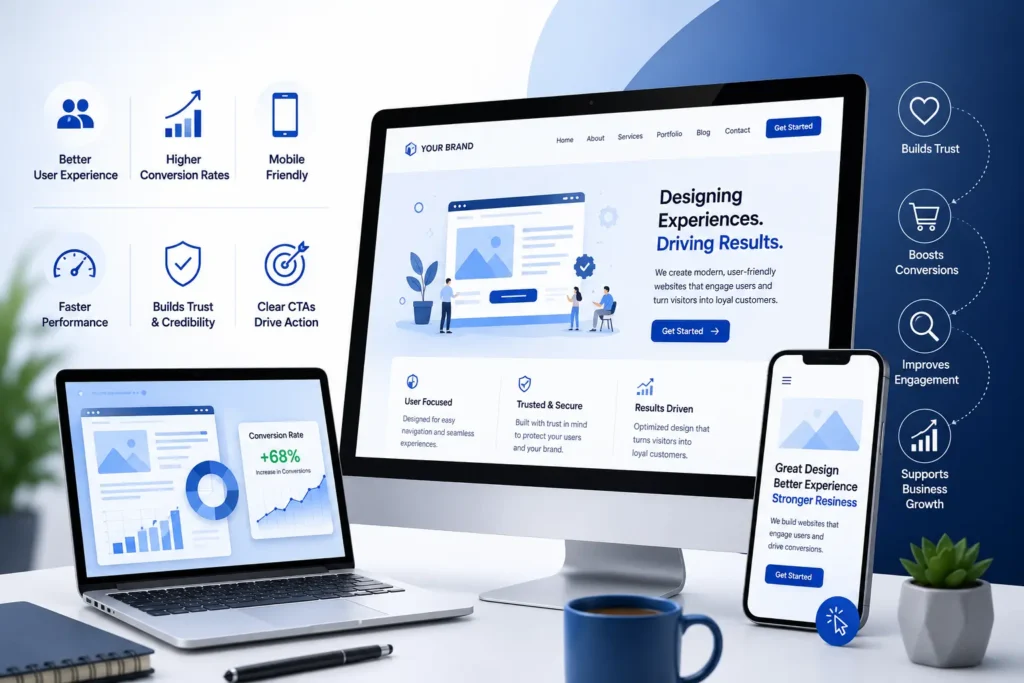
In an increasingly competitive digital landscape, your website acts as the face of your business. It’s often the first place where potential customers interact with your brand, and within moments, they decide whether to stay or leave. This makes website design a critical factor—not just for visual appeal, but for shaping user experience (UX) and influencing conversion rates.
A strategically designed website doesn’t just look good—it works seamlessly to guide users, build trust, and encourage meaningful actions like purchases, sign-ups, or inquiries. Understanding the importance of investing in professional website design for business growth becomes essential for companies aiming to stay competitive and maximize their digital potential. Let’s explore how design directly affects user behavior and business outcomes.
The Power of First Impressions
When users land on your website, their initial reaction is almost instant. A modern, clean, and visually appealing design can immediately establish credibility and encourage users to explore further.
On the flip side, outdated or cluttered layouts can create doubt and push visitors away before they even engage with your content. Your website’s appearance should reflect professionalism and align with your brand identity to make a strong first impression.
Easy Navigation Enhances Usability
Navigation is a key pillar of user experience. Visitors expect to find information quickly and effortlessly. If your website is difficult to navigate, users are more likely to leave in frustration.
A user-friendly navigation system should:
- Be simple and clearly structured
- Use straightforward labels
- Maintain consistency across pages
- Help users reach their goals with minimal effort
When users can move through your site smoothly, they are more likely to stay longer and take action.
Mobile-Friendly Design Is Essential
With a large percentage of users accessing websites through mobile devices, responsive design is no longer optional—it’s essential. Your website must adapt seamlessly to various screen sizes and devices.
A mobile-optimized site ensures:
- Better readability
- Smooth navigation
- Faster interactions
Poor mobile experiences, such as distorted layouts or hard-to-click elements, can quickly drive users away and negatively impact conversions.
Speed Matters More Than You Think
Website performance has a direct impact on user satisfaction. Slow-loading pages can frustrate users and cause them to abandon your site.
A fast website:
- Keeps users engaged
- Reduces bounce rates
- Improves overall experience
Optimizing images, reducing unnecessary scripts, and using efficient coding practices are key to maintaining strong performance without compromising design quality.
Visual Structure Drives Attention
A well-planned visual hierarchy helps users understand your content quickly and guides them toward important elements.
Using design techniques such as:
- Clear headings
- Contrasting colors
- Strategic spacing
- Highlighted buttons
…you can direct user focus and improve engagement. When users know exactly where to look, they are more likely to follow through with desired actions.
Building Trust Through Design
Trust is a crucial factor in conversions, and design plays a major role in establishing it. A professional-looking website reassures users that your business is reliable.
Important trust elements include:
- Testimonials and reviews
- Case studies
- Secure payment indicators
- Transparent contact details
A poorly designed site can raise doubts, while a polished and professional design builds confidence and encourages conversions.
Consistent Design Strengthens Branding
Consistency across your website creates a cohesive experience and reinforces your brand identity. Uniform use of colors, fonts, and visual elements makes your site more recognizable and easier to navigate.
Inconsistencies can confuse users and weaken your brand message. A consistent design approach ensures clarity and professionalism throughout the user journey.
Readability Improves Engagement
Content is only effective if users can easily read and understand it. Good design supports readability by presenting content in a clear and structured way.
Best practices include:
- Using legible fonts
- Keeping paragraphs concise
- Breaking content with headings and bullet points
- Ensuring proper contrast
An accessible and easy-to-read website keeps users engaged and encourages them to explore further.
Effective Calls-to-Action Increase Conversions
Calls-to-action (CTAs) are essential for guiding users toward specific goals. Whether it’s signing up or making a purchase, CTAs must be clear and visually prominent.
Strong CTAs:
- Use persuasive, action-driven language
- Stand out from surrounding content
- Appear at the right points in the user journey
When designed effectively, CTAs can significantly boost conversion rates.
Emotional Connection Through Design
Design influences how users feel about your brand. Colors, imagery, and layout all contribute to emotional responses that impact decision-making.
For instance:
- Bright colors can create urgency
- Minimal designs convey elegance
- High-quality visuals inspire trust
When users feel connected to your website, they are more likely to engage and convert.
Eliminating Barriers in the User Journey
A seamless user journey is key to improving conversions. Any obstacle that slows users down or creates confusion can lead to drop-offs.
Common issues include:
- Complicated forms
- Lengthy checkout processes
- Unclear instructions
Simplifying these elements makes it easier for users to complete actions, resulting in better outcomes.
The Link Between Design and SEO
Website design and search engine optimization are closely connected. Factors like mobile responsiveness, loading speed, and user engagement all influence search rankings.
A well-designed website:
- Encourages longer visits
- Reduces bounce rates
- Improves user satisfaction
These factors signal quality to search engines, helping your site rank higher and attract more visitors.
Continuous Improvement Through Data
Successful website design is an ongoing process. Regular analysis and testing help identify areas for improvement.
By using tools like analytics and A/B testing, you can:
- Understand user behavior
- Identify weak points
- Optimize design elements
This data-driven approach ensures your website continues to evolve and perform better over time.
Final Thoughts
Website design is a powerful tool that directly influences how users interact with your brand. From the first impression to the final conversion, every design element plays a role in shaping the overall experience.
By focusing on usability, performance, and visual appeal, businesses can create websites that not only attract visitors but also convert them into loyal customers.
Take Your Website to the Next Level
If your current website isn’t delivering the results you want, it may be time to rethink your design strategy. A professionally designed website can transform your online presence and significantly improve conversions.
Horizon Services offers expert solutions tailored to your business needs, combining creativity with performance to deliver exceptional results.Partner with Horizon Services, a reliable website design company in Watford, UK, and start building a website that truly works for your business.


